A Journey Through War and Love, Now Interrupted: The Kyiv to Kramatorsk Route

The Kyiv–Kramatorsk train can’t run up to its final destination anymore. The final stops of Sloviansk and Kramatorsk have become too dangerous, as Russia now targets railway infrastructure all along the frontline.

I was on board this train often, and each time, it was an important lesson in what this war is about.

What is that journey about? A Kyiv-Kramatorsk journey begins very early, with an alarm clock ringing at 5 a.m., and a race to Kyiv’s main station to catch the Kramatorsk-bound train which departs, still, at 6:44 in the morning, sharp, no matter what. At dawn, hundreds of people with red eyes—from crying, from exhaustion after a night of Russian air raids—hop on or say goodbye to their cherished relatives who are going on board.

It is called the “Love train” because it links families to their loved ones, from across the country, from the rear to the frontline, soldiers with their lives, in many ways. It is a war train. On the racks, camouflage bags in all shades of green show the presence of servicemen returning from permission. Chevrons show legendary brigades fighting in the direction of Lyman, Kostyantynivka, and Pokrovsk.

As the train departs, the sun rises and basks the statue of Mother Ukraine in a beautiful pink light, or wraps her up in a fog, depending on the weather. The train lulls us away from the capital. It is quiet, apart from the back and forth of the coffee-trolley that circulates across our carriages.

At 9 a.m. sharp, the daily minute of silence and the stern countdown in memory of all the people who gave their lives defending Ukraine plunges each carriage into an atmosphere of deep and quiet reflection. Some people stand, others just bow their heads. In Ukraine, everybody knows in their flesh the price of blood paid for the country to remain free.

On board, everybody is involved in the war: humanitarians, journalists, soldiers, and their families. Yet it is a train full of life: each ride brought back home dozens of people uprooted from Donbas and coming back to visit their relatives left behind, a handful of humanitarians, and dozens of wives, girlfriends, and children of soldiers.

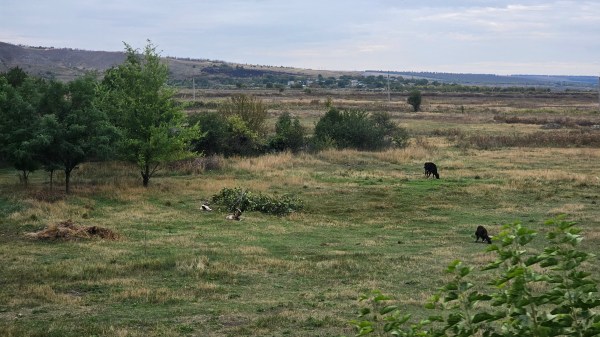
Landscape of Kharkivska Oblast, a hill in the background, the sky is cloudy but luminous.
Cattle is in a field in the distance.
Kharkivska Oblast as seen from the Kyiv-Kramatorsk train © Emmanuelle Chaze, July 2025

Riding this train, slowly heading towards Donbas, through the hills of Poltava and the vast fields of Kharkiv Oblast, is a travel through Ukraine’s rich landscapes and a travel through its history.

The closer one gets to Donbas, the more visible the war becomes. As the scenery passes by the window, it fills with ever more grey, dark green, and all shades of military vehicles that drive towards or come back from the frontline.

There are scenes of ordinary lives: babusias on their bicycles, mothers in pink hoodies walking their toddlers.

Then there is the Ukrzaliznytsia message upon arriving in Kramatorsk: “Thank you for your support. Our trains are getting ready to return to Donetsk, Luhansk… see you soon on Ukrainian railways.”

Each time, arriving in Kramatorsk felt like it could be the last. Earlier this summer, seeing the Lozova station in ruins foreboded the worst: it was only a matter of time until the Kyiv–Kramatorsk would stop running up until its final stations.

At each station, emotional reunions of families and lovers took place on the platform. But the most moving of all happened in Sloviansk and Kramatorsk, as the train finally came to a stop and the doors opened. At this moment, time stopped. We all knew one has to walk away from the station as quickly as possible, as it is Russia’s target of choice. Yet, time stopped right here. Tired but happy-looking men in military clothes, of all ages, welcomed their wives, fiancées, and girlfriends with tight embraces that let all their exhaustion and relief transpire. So many tears, most of happiness. Each hug is a victory against the aggressor. Each reunion a blessing for one soldier and his family.

Finally, love. Finally, this long-awaited hug. Love, through blood and sweat, and the smell of Ukraine’s soil and its hundreds of posadkas, the hiding lairs where tens of thousands of Ukrainians shelter along the frontline.

Love, the only thing that still makes sense. The one thing everybody fights for. This love persists, despite all this blood, all this misery, all this horror. All those killer drones.

The Love train no longer brings together lovers on Kramatorsk’s platforms. It is a tragedy. It was a handy commodity for thousands of customers.

But to think that love can be stopped because of the aggressor would be to grossly underestimate what Ukrainians are capable of—what love is capable of.
Life will be tougher for soldiers in that sector; travel will become even more uneasy.

But there will be other routes. There will be other reunions. And there will be love, always.
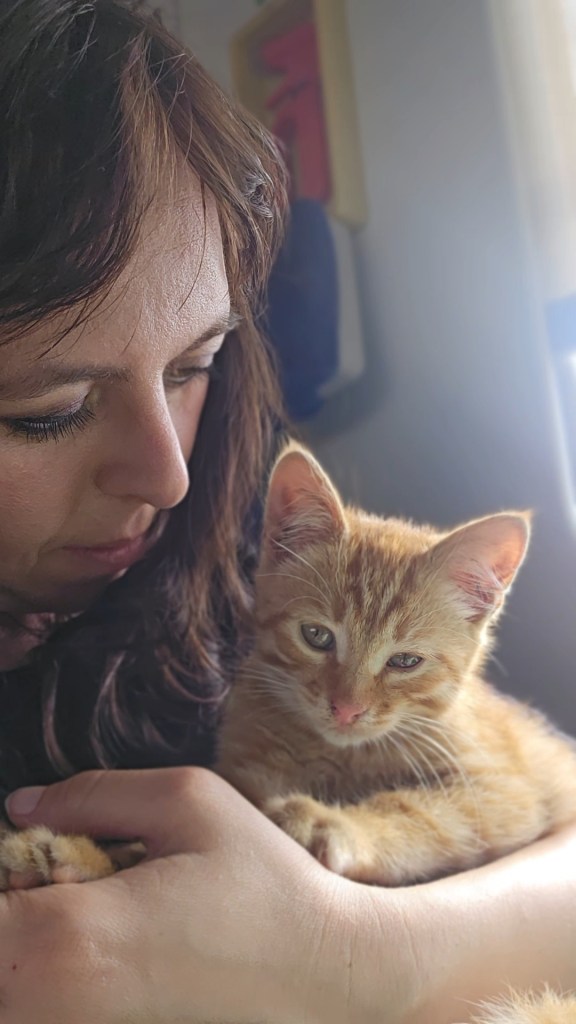
The author holding a ginger cat while on a Kyiv Kramatorsk train
A frontline kitten being evacuated from the frontline towards a Kyiv life © Emmanuelle Chaze, summer 2025

I must be living in an alternate reality.

I must be living in an alternate reality. A reality where children are listed online for adoption, where journalists are tortured and killed in captivity, where hundreds of drones & missiles are routinely thrown at Ukraine, because the more I voice those horrible things, the more they are met with indifference, and the other side invariably asks: “are Ukrainians hopeful about peace”?

I feel that in the public sphere, the lines between ‘both sides’ have become very much blurred. Yet nothing has changed on the ground: Russia is still attacking Ukraine to expand its territory, bombs it daily, murders prisoners, kills Ukrainian civilians, traffics Ukrainian children. Ukrainians are not being difficult or unreasonable for defending themselves.

It’s terrifying to see how many people are unable to grasp the extent of the crimes Russia commits daily — and how easily they hide behind ‘both sides’ narratives, or ‘Ukraine says / Russia says’ false equivalence. It feels like walking among anesthetized people. It’s terrifying to report on horrific news and be met with, ‘But are you sure this war crime really happened?

What takes the most energy isn’t living under bombs, losing people I know regularly to the war, or even reporting on it. What worries me is how many people choose not to see, choose not to speak the truth too openly, and prefer to fool themselves into believing that Russia can be genuine in negotiations — just so they can continue living a normal life.

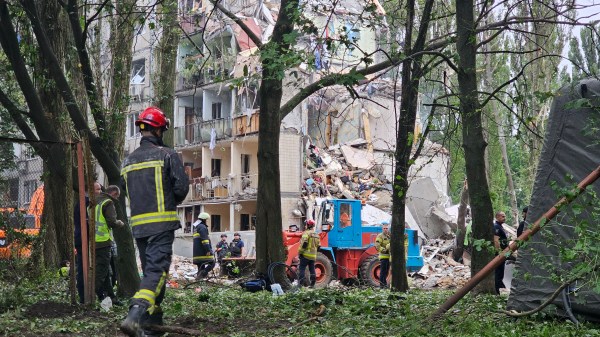
Rescuers working on the site of a russian strike in Kyiv, July 31st, 2025. Credit: Emmanuelle Chaze.

Thoughts in wintry Eastern Ukraine

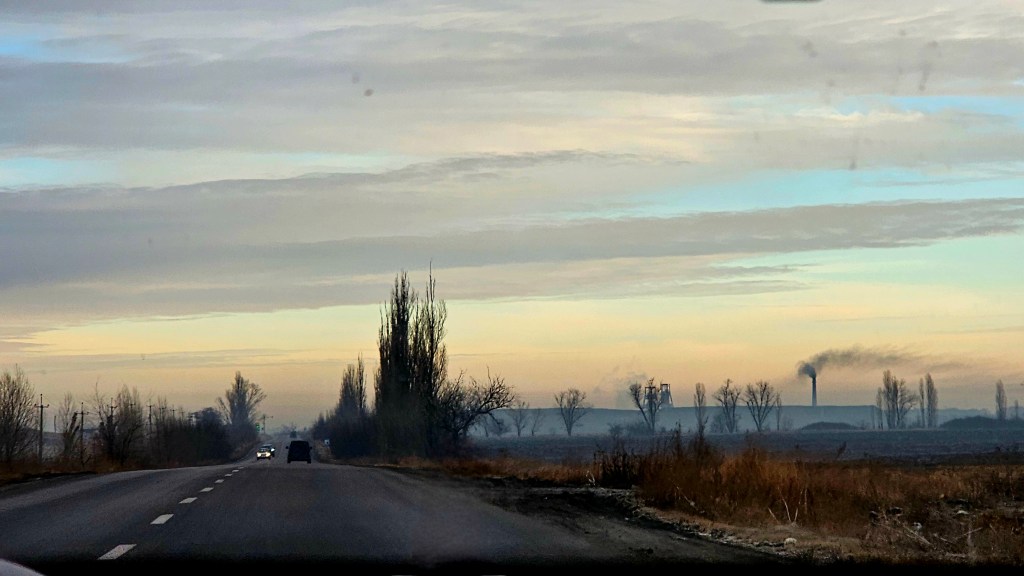
Driving through the wintry landscapes of Eastern Ukraine, I am, as usual, taken aback by the beauty of the landscapes that have not yet been destroyed. I feel the gap in understanding widening between those who know what is happening in the frontline regions and those who do not.

Every day, people in the West ask me what Ukrainians think about a ceasefire, about territorial concessions, whether they are tired, and if it’s time to negotiate. “All wars end at the table of negotiations.” It’s violent to hear—even from me, a foreigner here. I see firsthand what this would mean for Ukrainians, just as I see firsthand how landscapes in Eastern Ukraine are turning into ashes.

It feels as if Ukrainians scream into the void, dying in relative indifference, and that they would be better off doing so in silence because the West is tired, bored, and annoyed that they are still fighting.

But it’s not a game. Ukraine can’t just be switched off. This war will not be over just because some think it’s time to sign papers. Tens of thousands are dead and wounded; entire generations who were the bright future of Ukraine have perished. They are now called heroes, but beyond that soothing word is only silence and emptiness for tens of thousands of families who have lost their loved ones. What about the millions of victims of occupation? Do we simply forget that they exist? What about the deported children? Do we let them grow up brainwashed, then be used as cannon fodder against their own? Do we simply shrug them off? What about Crimea, which some say is “gone”? Why would that be? It’s not gone; it has been let down. Ukraine doesn’t fight just for itself—and yet it lacks the necessary support to win. It lacks the support to survive. Would you wish that for your family, your people?

But I want to hope: I saw what Syrians achieved with absolutely zero support from the world. So maybe Ukrainians, when they are similarly let down, will still overcome.

Road to Donetsk Oblast, December 2024, © Emmanuelle Chaze

Kyiv mourns another Fallen

© The pictures featured in that post, included the featured picture, were taken by Danylo Dubchak for Frontliner, which gave me permission to publish them here.

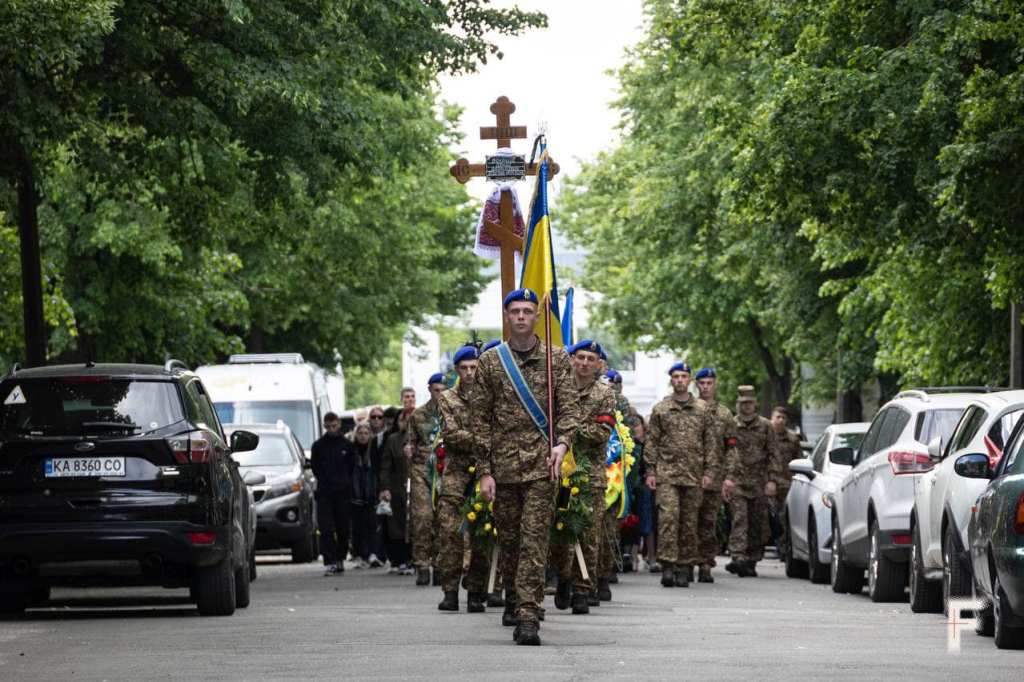
It’s early on Saturday morning and Kyiv’s city center is quiet. The weather forecast announced rain but there is a pale morning sun peaking through scattered clouds and a light breeze. There are no cars yet, the streets are still empty. There is the sound of my heels on the pavement and the hissing of the wind in the chestnut leaves, the petals of their flowers already beginning to scatter away. I’m walking towards Saint-Michael’s golden-domed cathedral.  The other night, I’ve met Dasha, whose friend Denys Zelenyi, killed in action at the age of 28, is being buried today. We decided to attend his funeral, as a sign of support for his family, for his friends, and as a sign of respect for the ultimate sacrifice he paid to defend our home.

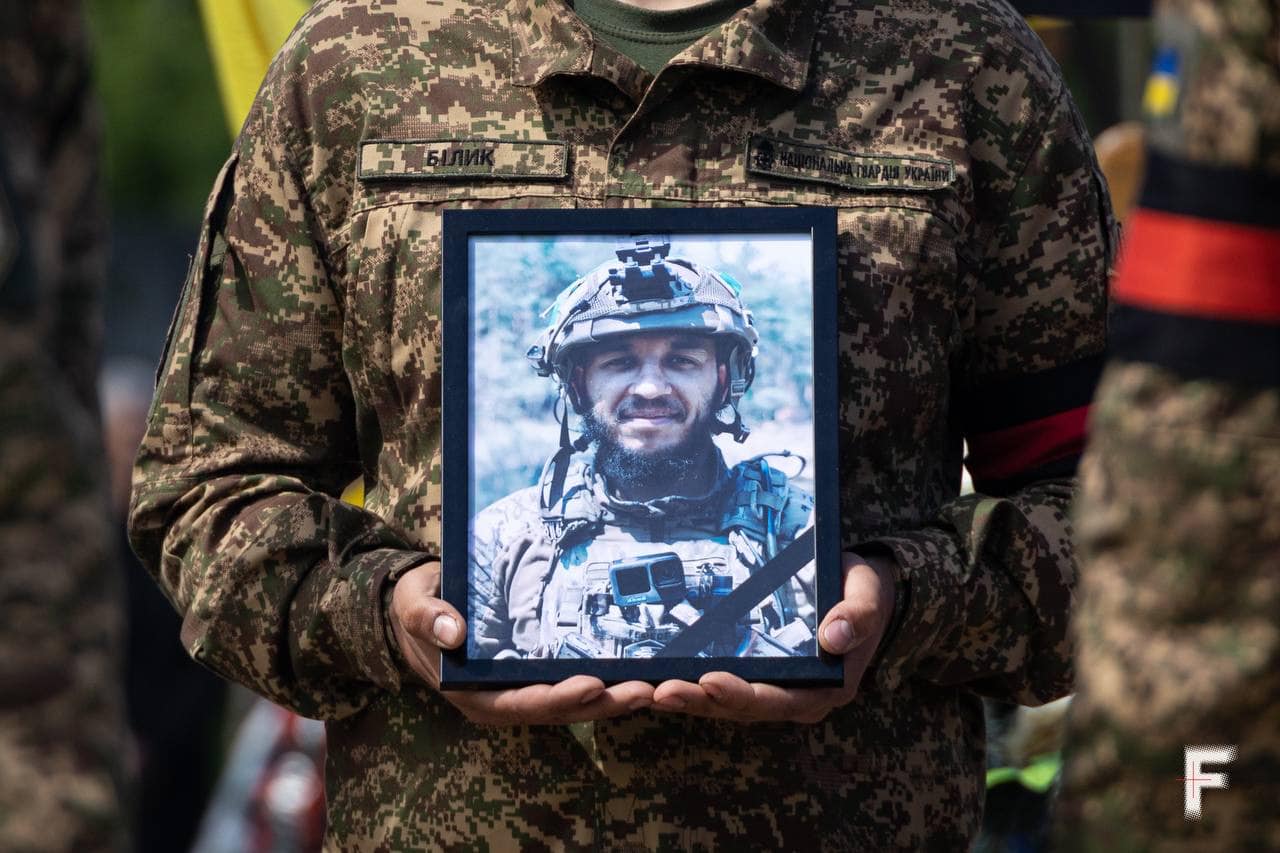
I didn’t know Denys, and now I never will. He has joined the ranks of Ukrainians that my circle of friends knew, of people who walked the streets I feel so comfortable walking, of people who worked in restaurants I like. Before the war, Denys was the manager of a very trendy Kyiv restaurant. He left it behind to serve, and saw some of the worst battles as senior lieutenant of the National Guard of Ukraine. I didn’t lose a friend, but I lost yet another opportunity to meet a new one. The bravest, those who joined, are being taken untimely and unfairly from us, from our society, here in Ukraine. They are the people who loved Ukraine the most, the ones for whom Ukraine came before everything else, before their own lives.

One by one, in Kyiv and elsewhere, people who used to light up a room have their own light abruptly switched off for eternity.

One by one, Ukrainians who have only known an Independent Ukraine lose their best to the folly that is Russia’s war against Ukraine.

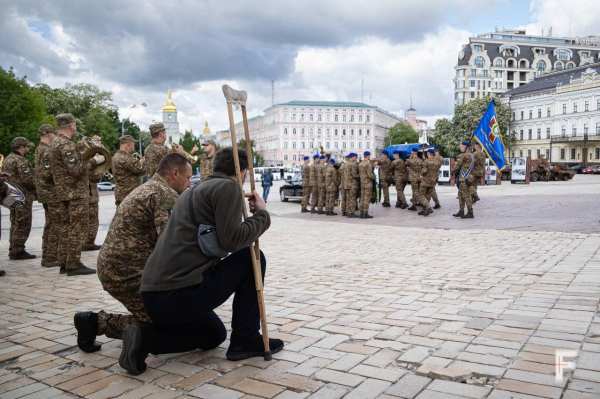
Funeral of Denys Zelenyi ©Danylo Dubchak, Frontliner

Dasha and I meet at a crossroads, and walk together to the Cathedral. On social media, the news of Denys’s death was widely shared, but not very many people showed up, in comparison to other funerals. People who are here though are truly devastated. Servicemen are visibly upset, they lost a brother-in-arm. Kyivans arrive with eyes red and swollen from crying, they lost a friend, a colleague, the one among them who took up the arms. Their pain is immense.

We are asked to form a guard of honour for Denys’s procession towards the Cathedral. On the one side, the soldiers, on the other, civilians. We wait long minutes in silence. We hear the whistle of birds, and the wind gently sings in the chestnut leaves again. It feels like Life makes itself known, just as we are faced with Death. It feels like eternity is speaking.

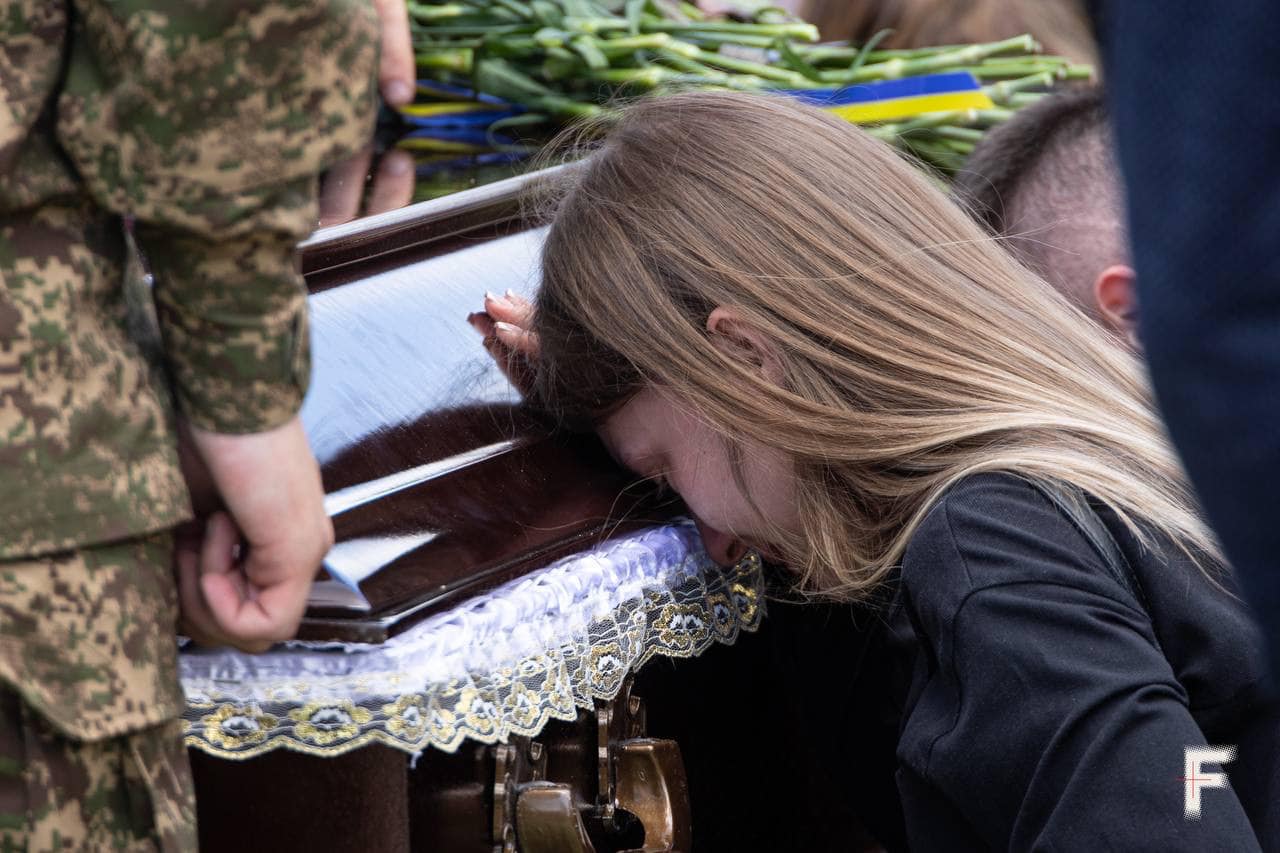
It’s 9am, the moment when all of Ukraine stands still to honour the memory of all its Fallen. It’s the moment the faint melody of Plive Kacha resonates, breaking everyone’s heart even more. Carried by soldiers, Denys’s casket arrives, covered by a blue and yellow shroud. We all kneel before the Fallen. The sobs intensify. A young woman collapses in the arms of her friends, crying uncontrollably. Her broken heart breaking the silence. Indescribable pain, everywhere. Irreparable loss.

Funeral of Denys Zelenyi © Danylo Dubchak for Frontliner

We follow the casket inside the Cathedral. I stay at the back, and Dasha walks a bit closer. Slowly, the cathedral fills up. We surround Denys’s closed casket in a silence only broken by the funeral litanies of the priests. We are lulled by their voices and the sweet scent of incense. There are a few photographers, who discreetly document the scene. I know some of them for having met them on sites of other tragedies before. There is a sad irony to this: here in Ukraine, funerals have become a new, and saddest commonplace of socialization since the full-scale invasion. I think about taking pictures, but I can’t lift my hand and point with my phone at so many people grieving their loved one.

More tears, more sobs, and people holding each other and the flowers they brought, and the ceremony ends. I stay behind to light a candle. I’m an atheist but I don’t know what else to do to conjure fate and pray that none of the soldiers I know will ever take central stage at one of these funerals.

Outside of Saint-Michael’s golden-domed Cathedral, life has resumed in Kyiv, streets have filled up. Denys’s casket is now in the funeral car, its boot still open so that people can come lay their flowers and kneel for a last goodbye.

The line is long, Denys will be missed by many. A young boy dutifully lays his roses, looks a last time and, breaking in tears, brings his hands to his eyes, comforted by his mother. Dasha places a hand of the coffin and kneels to say goodbye to her friend.

It is over. Ukraine lost another son, Kyiv lost another one of its children. Later, another casket will come in, followed by another family mourning the loss of their loved one, in a terrible litany of funerals that will forever change the face of the country.

© The pictures featured in that post were all taken by Danylo Dubchak for Frontliner, which gave me permission to publish them here.

Coming back alive

You might remember Max from the day of his liberation, a year ago, when after ten months in Russian captivity, he was returned to Ukraine. That day, a photographer captured the moment when Max was looking at an apple in disbelief and awe, having not seen fresh fruits or vegetables during his whole time of detention.

Last year, on the picture, he was looking gaunt, having lost 32 kilos during his ordeal. Shaved, skeletal, he was nothing like the tall, healthy-looking man who stood in front of me. The wounds run deep, he still have to deal with injuries both physical and psychological, but he is alive, and safe, for now.

It is almost a year to the day since he was freed, and I have a thousand questions, and the fear that each of them could cause more damage by reviving all the trauma. I know that I shouldn’t show emotion, in order to not make it worse. I know that I should not feel as much as I do, because it is not my place, but that particular day, I feel more intensely than usual, and I know it from the moment I leave home to meet Max. I feel the pressure and the privilege of being able to hear and share his story: we all want to know how he, and any other person who survived this ordeal, is doing right now. We all have those thousand questions.

Only, how do you ask them? How do you ask someone to share the unspeakable?

I don’t think there is a roadmap. What there is though, is very simple: we are many things, me a journalist, having moved to Ukraine, a learner of the country, and an ignorant of war until recently. Max, a civilian turned soldier, returned to civilian life for now, a husband, a father, a victim and a witness of the harm caused to his country, to his people and to himself, by the aggressor neighbor, now sitting here at a café table with a coffee and a macaron in front of him. My first thought is that I would like him to have all the macarons in the world for the rest of his life, every day, as if that could erase the ten months of privations. What there is, is very simple: humanity, as two people simply sit in front of each other.

And then we start talking. We start from the moment when Max, a civilian but also a reservist born in Donetsk, joins the army again. His battalion was surrounded in Kyiv region at the end of March 2022, and dozens of soldiers were captured. His ordeal starting March 20th. What he tells me is something I only ever read about. The pattern of abuse, beating, tormenting, reminds me of what a survivor of Russian torture in Balakliya, in Kharkiv region, was saying, but on a way larger scale. You can’t listen to such things without feeling you are having a bad dream, a dream you can’t wake up from because you are already wide awake. Several times, I am shocked not just by what Max went through, but by the casual aspect of the torture routines he describes, until Max says “one moment, please…” and looks for the exact word in English for the feeling he wants to express: “Absurd! It was absurd…” he says.

The banality of evil is here, right here. Everything he explains reminds me of what Charlotte Delbo or Primo Levi described when talking about concentration camps. The malnourishment – two large cups of clear soup with sometimes a leaf of cabbage in it, the randomness of “punishments”, people being chosen at a drunken guard’s will to be beaten up or tazed, hundreds of squats or push-ups having to be made by already frail prisoners, civilians and soldiers alike. And the utter ignorance of guards and officers alike when it came to Ukraine, assuming it was as backwards a place as the ones they came from, and assuming Max was constantly tormented in Kyiv because he came from Donetsk. thinking that because Max came from Donetsk, not believing him and other prisoners that Ukraine was a country where people had, prior to the war, an actually nice life.

With every word describing life in captivity, I understand that we are beyond the limits of reason, not to mention way past the respect of international law, and that the only difference I see with the concentration system of WW2 is that Russian prisons are not extermination camps – they are places where the individual is meant to be broken, emotionally and physically, subjugated, and forced into submission and admission that Russia will crush all of its neighbors. As months go by, the violence eventually decreases, minus some outbursts, because even tormentors understand that those prisoners have more value alive than dead.

Throughout our conversation, Max sometimes holds his cup of coffee, and I see the same hands as the ones that held that apple a year ago. Those hands could be those of any of my friends, and like the hands of thousands of civilians turned soldiers after February 24th. They are the hands that held a phone for the first time in ten months on February 4th, 2023, to dial in the number of his wife Julia, the one number he knew by heart, and he could finally hear his love after all that time, and tell her he was free. Max got lucky to come home, he now can hold his family, his wife and his daughters, his parents, tight in his arms again. He told me that he had been so worried to lose his ageing father during captivity, and to remain imprisoned for years.

After everything Max told me, I have one question: how did he manage to remain sane all that time? and again, the answer is very simple: because he is human, and along the dozen other prisoners in his cell, they kept each other sane by sharing stories, recounting nice moments of their lives, exchanged recipes of their favorite foods, looking forward to the next time they would be able to eat it. Those very thoughts of the love they knew existed, contributed to keeping them alive. All of this was stronger than the abject mediocrity and casual violence they were subjected to.

What is there to say, and what is there to do after having been through that, and having recounted it? Max and I look at each other, he asks me why I decided to come to Ukraine. I share my story as well, and now both of us have tears swelling in our eyes. It’s not sadness. It’s very simple: it’s our humanity.

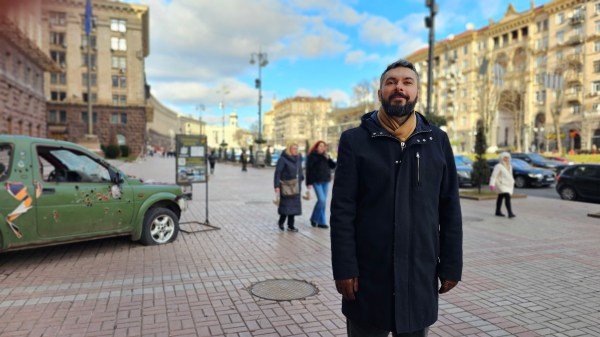
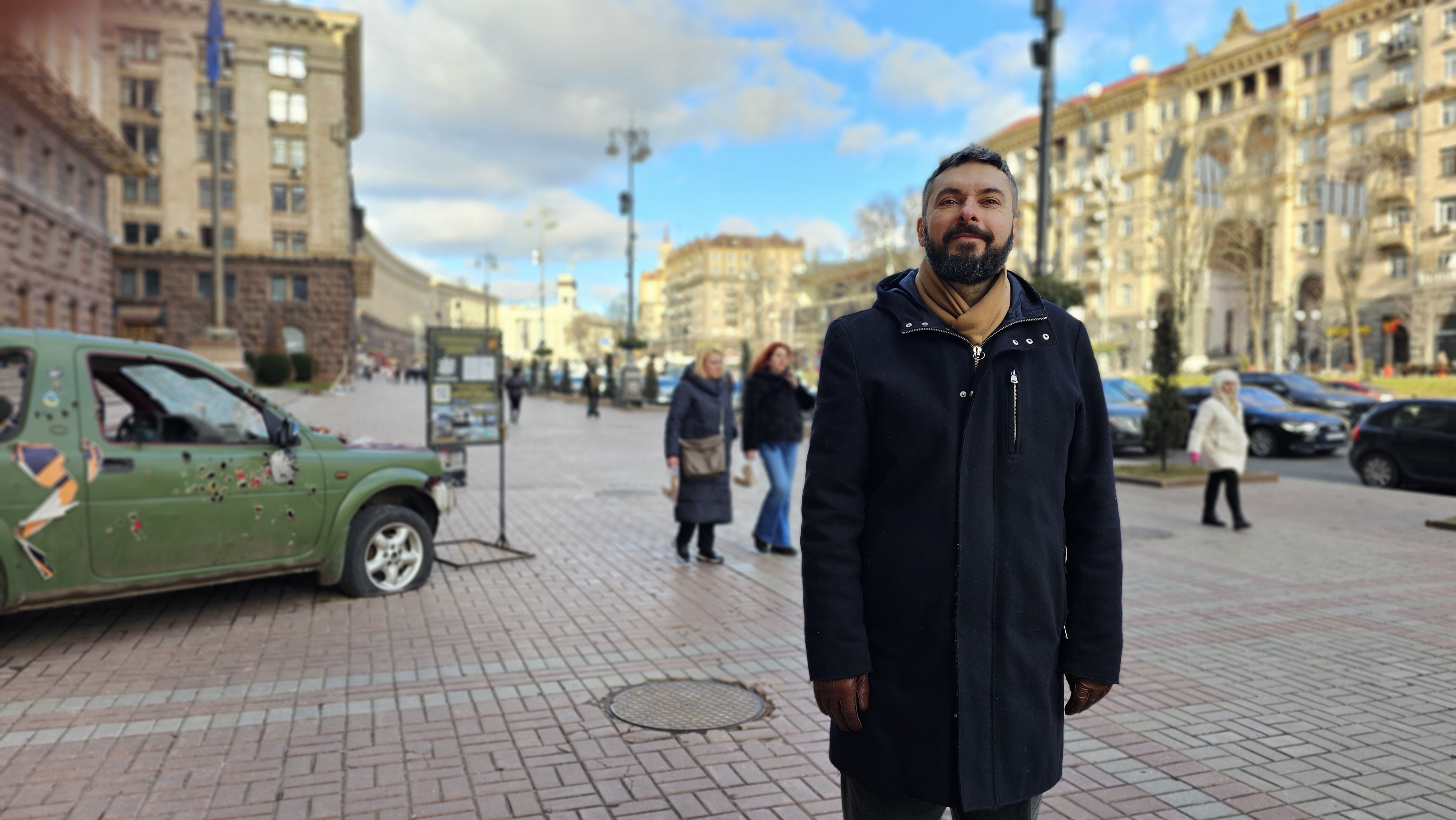
Max Kolesnikov, a year after his liberation, on Khreshchatik in Central Kyiv.
Behind him, a bullet-ridden civilian vehicle.
Max Kolesnikov, a year after his liberation, on Khreshchatik in Central Kyiv © Emmanuelle Chaze, February 2024.

Website Powered by WordPress.com.

Up ↑