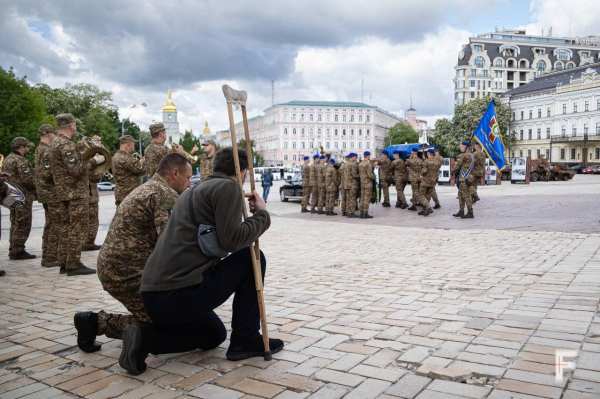
© The pictures featured in that post, included the featured picture, were taken by Danylo Dubchak for Frontliner, which gave me permission to publish them here.
It’s early on Saturday morning and Kyiv’s city center is quiet. The weather forecast announced rain but there is a pale morning sun peaking through scattered clouds and a light breeze. There are no cars yet, the streets are still empty. There is the sound of my heels on the pavement and the hissing of the wind in the chestnut leaves, the petals of their flowers already beginning to scatter away. I’m walking towards Saint-Michael’s golden-domed cathedral. The other night, I’ve met Dasha, whose friend Denys Zelenyi, killed in action at the age of 28, is being buried today. We decided to attend his funeral, as a sign of support for his family, for his friends, and as a sign of respect for the ultimate sacrifice he paid to defend our home.
I didn’t know Denys, and now I never will. He has joined the ranks of Ukrainians that my circle of friends knew, of people who walked the streets I feel so comfortable walking, of people who worked in restaurants I like. Before the war, Denys was the manager of a very trendy Kyiv restaurant. He left it behind to serve, and saw some of the worst battles as senior lieutenant of the National Guard of Ukraine. I didn’t lose a friend, but I lost yet another opportunity to meet a new one. The bravest, those who joined, are being taken untimely and unfairly from us, from our society, here in Ukraine. They are the people who loved Ukraine the most, the ones for whom Ukraine came before everything else, before their own lives.
One by one, in Kyiv and elsewhere, people who used to light up a room have their own light abruptly switched off for eternity.
One by one, Ukrainians who have only known an Independent Ukraine lose their best to the folly that is Russia’s war against Ukraine.
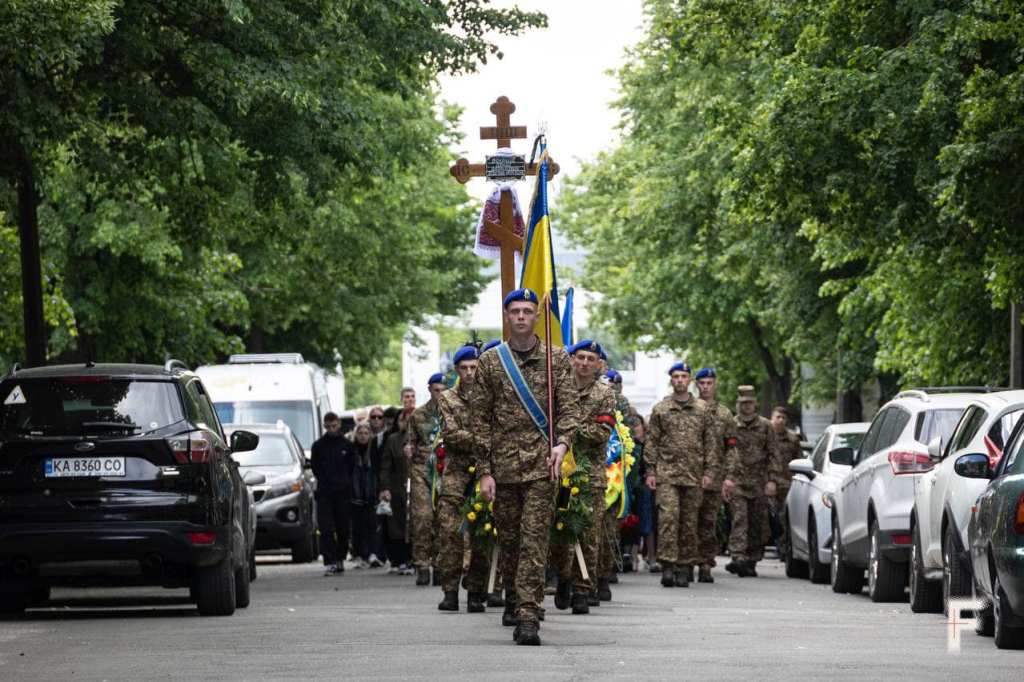
Dasha and I meet at a crossroads, and walk together to the Cathedral. On social media, the news of Denys’s death was widely shared, but not very many people showed up, in comparison to other funerals. People who are here though are truly devastated. Servicemen are visibly upset, they lost a brother-in-arm. Kyivans arrive with eyes red and swollen from crying, they lost a friend, a colleague, the one among them who took up the arms. Their pain is immense.
We are asked to form a guard of honour for Denys’s procession towards the Cathedral. On the one side, the soldiers, on the other, civilians. We wait long minutes in silence. We hear the whistle of birds, and the wind gently sings in the chestnut leaves again. It feels like Life makes itself known, just as we are faced with Death. It feels like eternity is speaking.
It’s 9am, the moment when all of Ukraine stands still to honour the memory of all its Fallen. It’s the moment the faint melody of Plive Kacha resonates, breaking everyone’s heart even more. Carried by soldiers, Denys’s casket arrives, covered by a blue and yellow shroud. We all kneel before the Fallen. The sobs intensify. A young woman collapses in the arms of her friends, crying uncontrollably. Her broken heart breaking the silence. Indescribable pain, everywhere. Irreparable loss.

We follow the casket inside the Cathedral. I stay at the back, and Dasha walks a bit closer. Slowly, the cathedral fills up. We surround Denys’s closed casket in a silence only broken by the funeral litanies of the priests. We are lulled by their voices and the sweet scent of incense. There are a few photographers, who discreetly document the scene. I know some of them for having met them on sites of other tragedies before. There is a sad irony to this: here in Ukraine, funerals have become a new, and saddest commonplace of socialization since the full-scale invasion. I think about taking pictures, but I can’t lift my hand and point with my phone at so many people grieving their loved one.
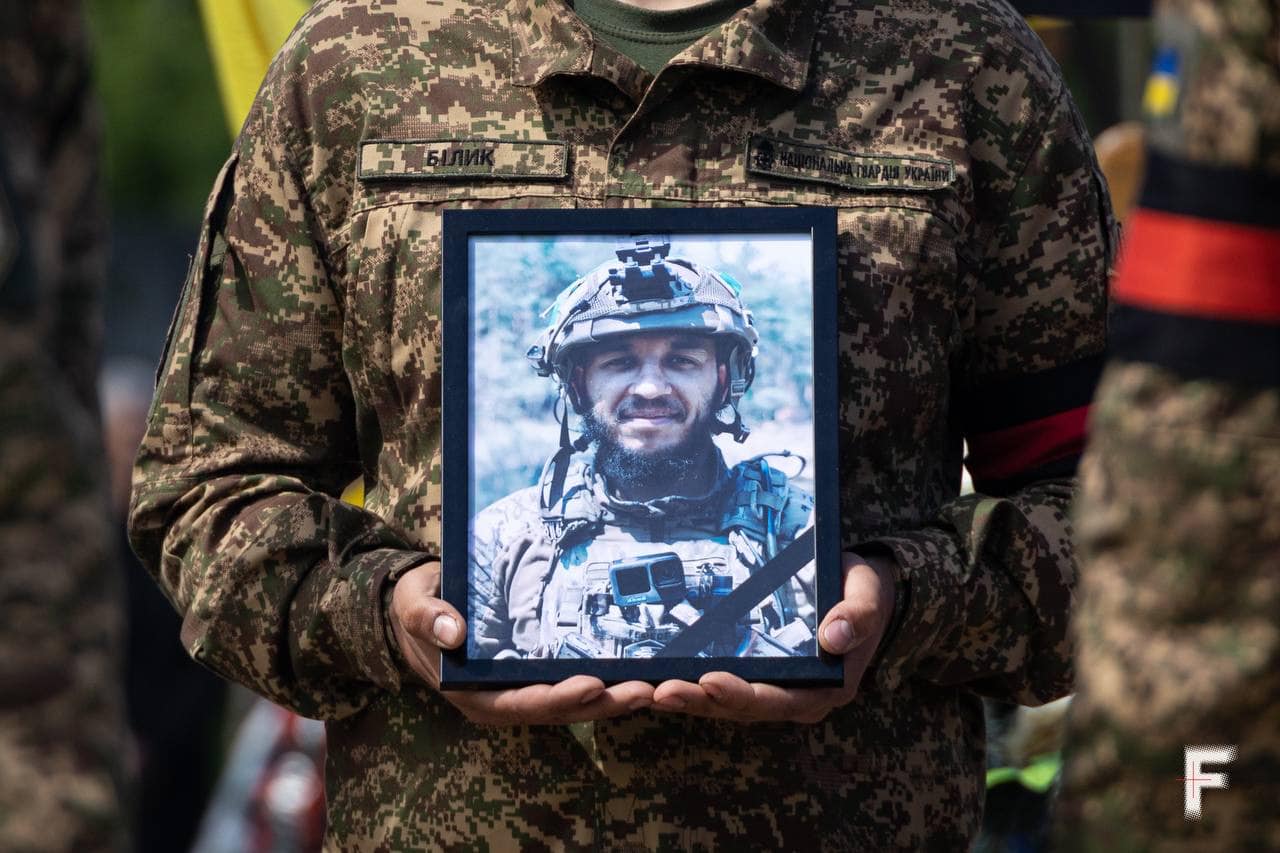

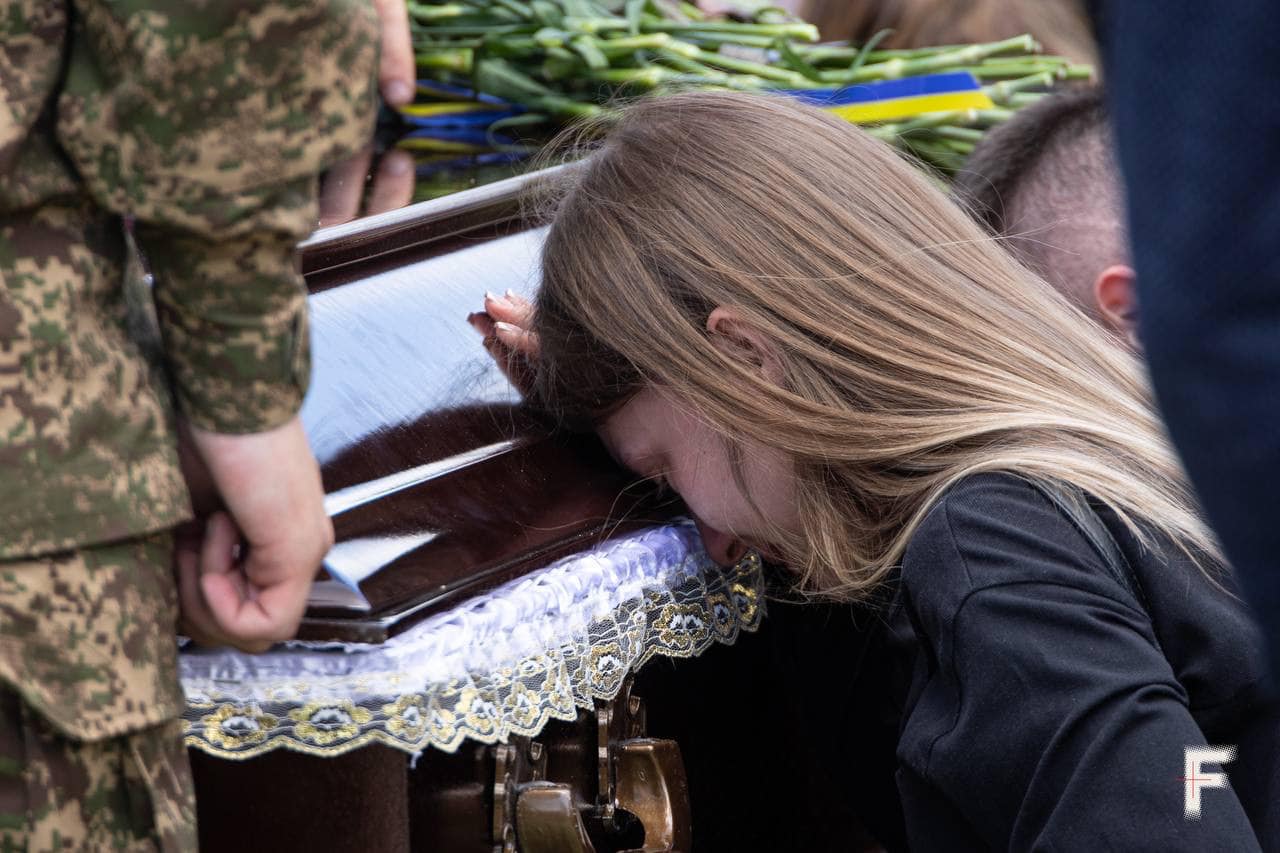
More tears, more sobs, and people holding each other and the flowers they brought, and the ceremony ends. I stay behind to light a candle. I’m an atheist but I don’t know what else to do to conjure fate and pray that none of the soldiers I know will ever take central stage at one of these funerals.
Outside of Saint-Michael’s golden-domed Cathedral, life has resumed in Kyiv, streets have filled up. Denys’s casket is now in the funeral car, its boot still open so that people can come lay their flowers and kneel for a last goodbye.
The line is long, Denys will be missed by many. A young boy dutifully lays his roses, looks a last time and, breaking in tears, brings his hands to his eyes, comforted by his mother. Dasha places a hand of the coffin and kneels to say goodbye to her friend.
It is over. Ukraine lost another son, Kyiv lost another one of its children. Later, another casket will come in, followed by another family mourning the loss of their loved one, in a terrible litany of funerals that will forever change the face of the country.
© The pictures featured in that post were all taken by Danylo Dubchak for Frontliner, which gave me permission to publish them here.
