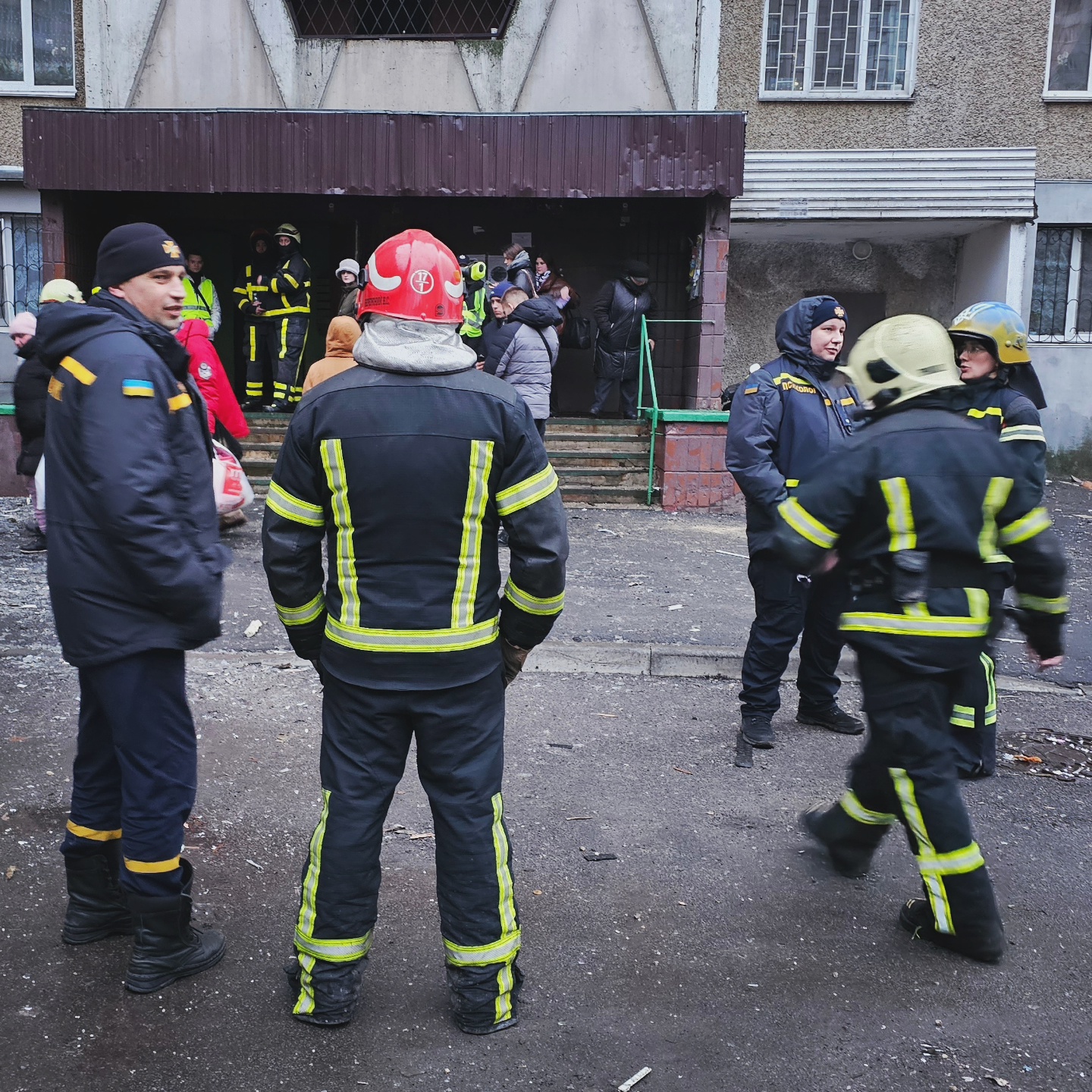
The Kyiv–Kramatorsk train can’t run up to its final destination anymore. The final stops of Sloviansk and Kramatorsk have become too dangerous, as Russia now targets railway infrastructure all along the frontline.
I was on board this train often, and each time, it was an important lesson in what this war is about.
What is that journey about? A Kyiv-Kramatorsk journey begins very early, with an alarm clock ringing at 5 a.m., and a race to Kyiv’s main station to catch the Kramatorsk-bound train which departs, still, at 6:44 in the morning, sharp, no matter what. At dawn, hundreds of people with red eyes—from crying, from exhaustion after a night of Russian air raids—hop on or say goodbye to their cherished relatives who are going on board.
It is called the “Love train” because it links families to their loved ones, from across the country, from the rear to the frontline, soldiers with their lives, in many ways. It is a war train. On the racks, camouflage bags in all shades of green show the presence of servicemen returning from permission. Chevrons show legendary brigades fighting in the direction of Lyman, Kostyantynivka, and Pokrovsk.
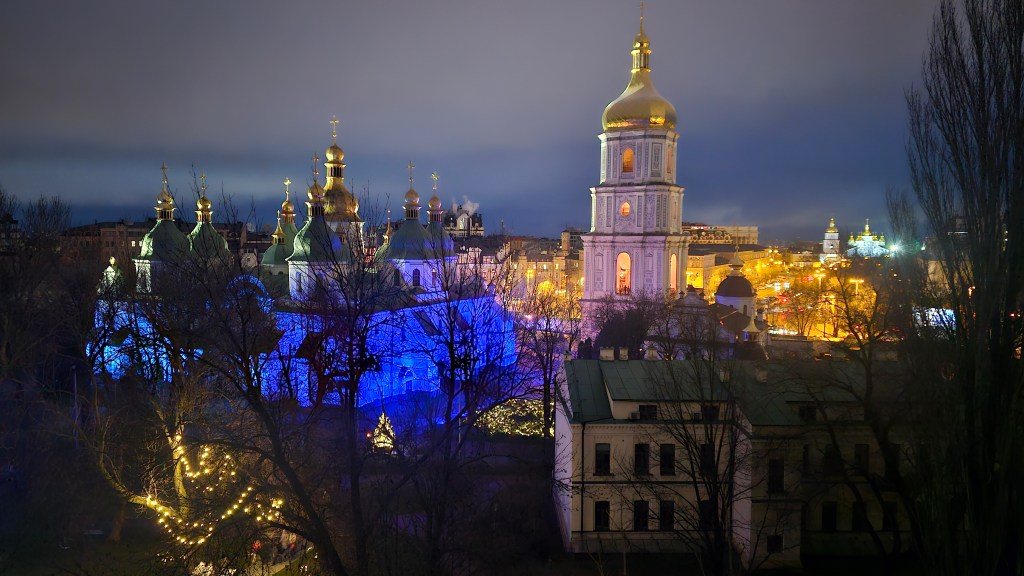
As the train departs, the sun rises and basks the statue of Mother Ukraine in a beautiful pink light, or wraps her up in a fog, depending on the weather. The train lulls us away from the capital. It is quiet, apart from the back and forth of the coffee-trolley that circulates across our carriages.
At 9 a.m. sharp, the daily minute of silence and the stern countdown in memory of all the people who gave their lives defending Ukraine plunges each carriage into an atmosphere of deep and quiet reflection. Some people stand, others just bow their heads. In Ukraine, everybody knows in their flesh the price of blood paid for the country to remain free.
On board, everybody is involved in the war: humanitarians, journalists, soldiers, and their families. Yet it is a train full of life: each ride brought back home dozens of people uprooted from Donbas and coming back to visit their relatives left behind, a handful of humanitarians, and dozens of wives, girlfriends, and children of soldiers.
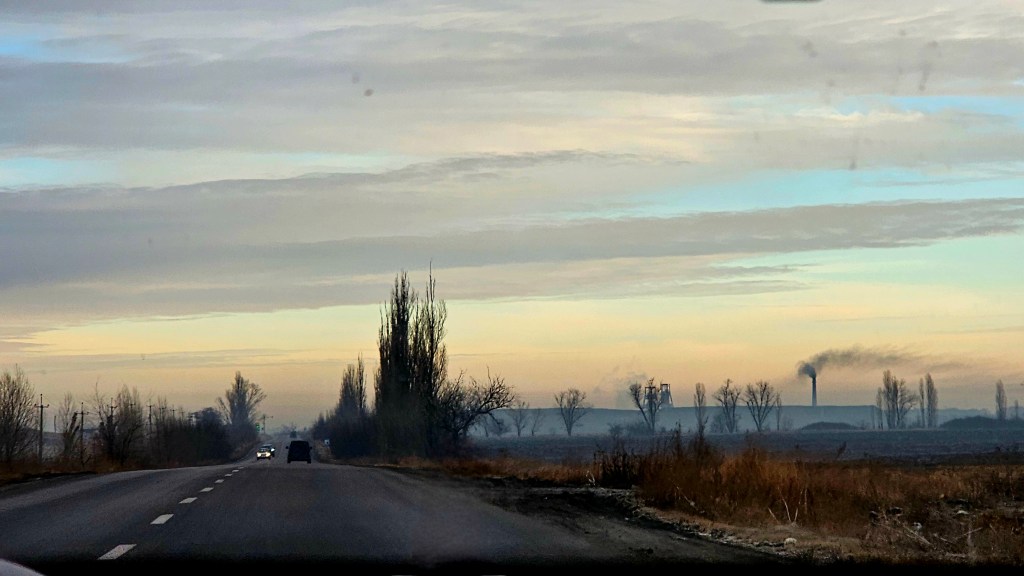
Riding this train, slowly heading towards Donbas, through the hills of Poltava and the vast fields of Kharkiv Oblast, is a travel through Ukraine’s rich landscapes and a travel through its history.
The closer one gets to Donbas, the more visible the war becomes. As the scenery passes by the window, it fills with ever more grey, dark green, and all shades of military vehicles that drive towards or come back from the frontline.
There are scenes of ordinary lives: babusias on their bicycles, mothers in pink hoodies walking their toddlers.
Then there is the Ukrzaliznytsia message upon arriving in Kramatorsk: “Thank you for your support. Our trains are getting ready to return to Donetsk, Luhansk… see you soon on Ukrainian railways.”
Each time, arriving in Kramatorsk felt like it could be the last. Earlier this summer, seeing the Lozova station in ruins foreboded the worst: it was only a matter of time until the Kyiv–Kramatorsk would stop running up until its final stations.
At each station, emotional reunions of families and lovers took place on the platform. But the most moving of all happened in Sloviansk and Kramatorsk, as the train finally came to a stop and the doors opened. At this moment, time stopped. We all knew one has to walk away from the station as quickly as possible, as it is Russia’s target of choice. Yet, time stopped right here. Tired but happy-looking men in military clothes, of all ages, welcomed their wives, fiancées, and girlfriends with tight embraces that let all their exhaustion and relief transpire. So many tears, most of happiness. Each hug is a victory against the aggressor. Each reunion a blessing for one soldier and his family.
Finally, love. Finally, this long-awaited hug. Love, through blood and sweat, and the smell of Ukraine’s soil and its hundreds of posadkas, the hiding lairs where tens of thousands of Ukrainians shelter along the frontline.
Love, the only thing that still makes sense. The one thing everybody fights for. This love persists, despite all this blood, all this misery, all this horror. All those killer drones.
The Love train no longer brings together lovers on Kramatorsk’s platforms. It is a tragedy. It was a handy commodity for thousands of customers.
But to think that love can be stopped because of the aggressor would be to grossly underestimate what Ukrainians are capable of—what love is capable of. Life will be tougher for soldiers in that sector; travel will become even more uneasy.
But there will be other routes. There will be other reunions. And there will be love, always.
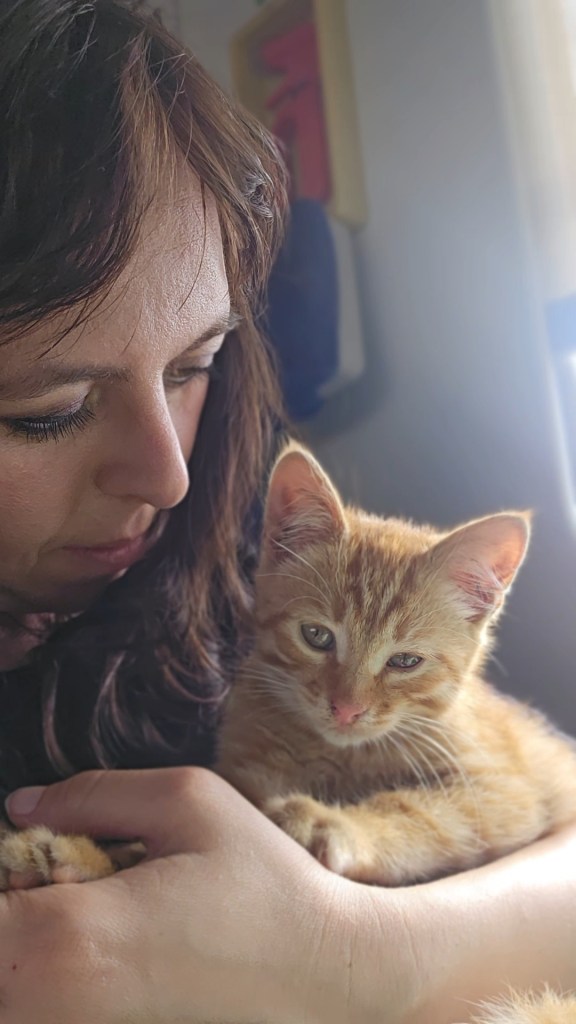
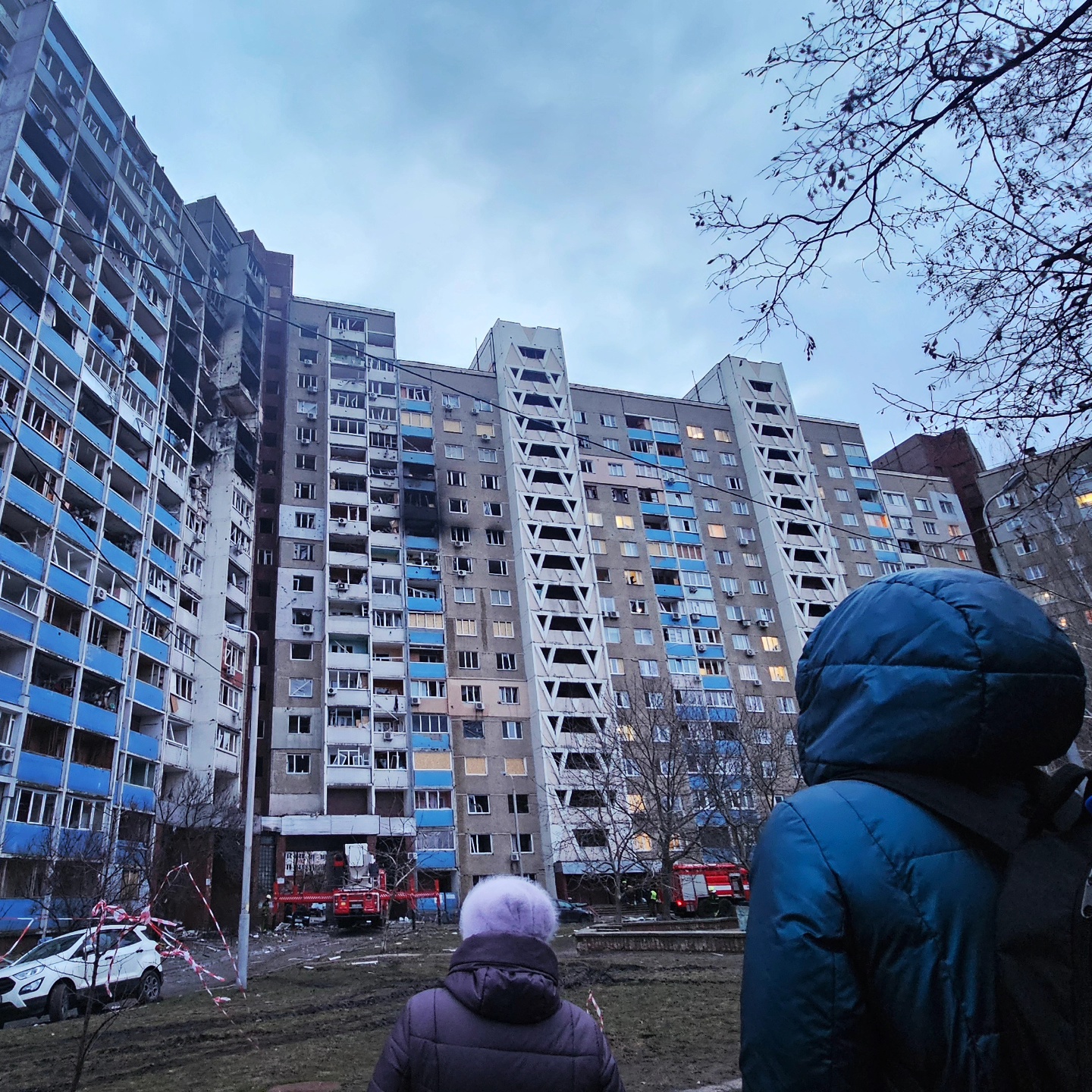
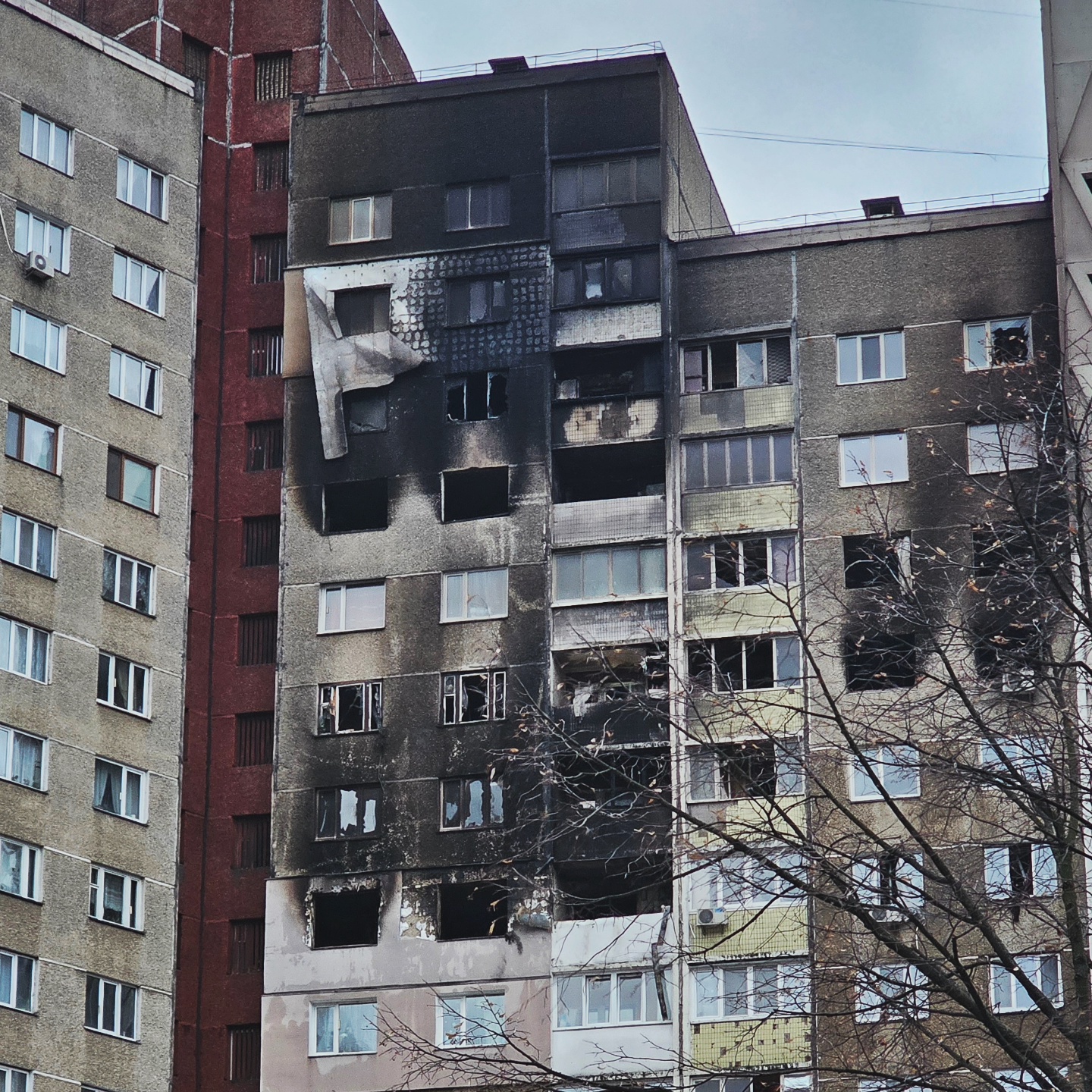
Podil was hit badly two nights ago, it was the second night in a row that we had been having strikes in the city center. Considering, anybody living in the heart of Kyiv is very privileged: we can enjoy a relatively normal life most of the time. Except when Russia strikes.
The following day, when I asked my friend Katya, who lives in that district, if she was ok, she told me that everything was fine with her. I was dealing with my own trauma that day, reporting on the death of two journalists, murdered by Russia with a drone, in Kramatorsk, a city I know well, a city which I know faces the same fate as too many others in Donbas before: Chasiv Yar, Pokrovsk, Toretsk, which you, reading me in English, might know only through pictures of their utter devastation. But those places didn’t use to be ashes, they used to be full of flowers, and full of life, until Russia came and levelled them to the ground.
So after reporting on the death of Olena Gramova and Yevhen Karmazin, I felt nothing but emptiness. Somehow, this particular murder hit me, my hands were shaking uncontrollably. I didn’t know them personally, I knew them through their work. I shelved the ton of reports I was supposed to hand in because I simply could not think, let alone write. I watched one of their reports, embedded with an NGO evacuating civilians in Donbas, something they filmed in March this year. Under Russian attack, they follow an NGO in Kostyantinivka now evacuated hospital. I can’t help but cry when I see that this video got a little more than a thousand views since its publication in March. Those are colleagues who day in, day out, risked their lives on the ground, close to the red zone, to report on Russia’s crimes against Ukraine.
But back to Kyiv. Today I was chatting to Katya’s sister, on a completely different topic (namely, why does a Kramatorsk hospital still invest in a 5 million hryvnias top-notch new X-ray machine when the city is being bombed daily and whether this will ever make sense), and she let slip that she is very stressed out “given what happened to Katya”. Follows a moment of confusion, what have I missed? It turns out that Katya’s building got hit with shrapnel that night. I write back to Katya. “and you told me you were fine?!”. She answers “well, I’m fine, and the windows shattered were on the other side of the building, and I’m alive, so, considering, yes I’m fine”. I’m both relieved and appalled. This is neither fine nor normal, yet it is our reality.
The same day, October 22nd, Russia launched a kamikaze drone on a kindergarten in Kharkiv. The 48 children present were apparently uninjured, but one man died, one person lost a leg (authorities communicated on a “traumatic injury resulting in amputation”, and another person suffered burns on 20% of their body”).
This week, the numbing sound of diesel generators roar in most streets in Kyiv. It is deafening. Many shops, cafes and restaurants are plunged in obscurity. It is dark and cold, I am writing those lines wrapped in my coat, with the desk light flickering, and all my electric devices are charging, just in case. In the corridor, I have lined up water supplies, in case Russia hits again and deprives us from running water. Next to the bottles, a fire extinguisher, in case a drone, or worse, a missile, hits the building. A bag with my important documents and the cat transport boxes are ready to be grabbed in case I have to leave the flat in a hurry.
I am lucky to live in the safest area of Kyiv, a European capital which still shines in many ways, except not at night because now it’s mostly plunged in an unwelcoming darkness, and it does not feel safe anymore. As I am writing those lines, I ask myself, am I fine? I am, because I am alive and I still have all my limbs. My loved ones are alive. I get to write these lines. This is what we consider fine here. But if I answer the question “are Ukrainians fine?” (which they can answer themselves, please, please ask them directly), I would say, no, Ukrainians are not fine, they are surviving, although like every other being, they deserve to live safely, instead of seeing their country being ripped apart daily.
I must be living in an alternate reality. A reality where children are listed online for adoption, where journalists are tortured and killed in captivity, where hundreds of drones & missiles are routinely thrown at Ukraine, because the more I voice those horrible things, the more they are met with indifference, and the other side invariably asks: “are Ukrainians hopeful about peace”?
I feel that in the public sphere, the lines between ‘both sides’ have become very much blurred. Yet nothing has changed on the ground: Russia is still attacking Ukraine to expand its territory, bombs it daily, murders prisoners, kills Ukrainian civilians, traffics Ukrainian children. Ukrainians are not being difficult or unreasonable for defending themselves.
It’s terrifying to see how many people are unable to grasp the extent of the crimes Russia commits daily — and how easily they hide behind ‘both sides’ narratives, or ‘Ukraine says / Russia says’ false equivalence. It feels like walking among anesthetized people. It’s terrifying to report on horrific news and be met with, ‘But are you sure this war crime really happened?
What takes the most energy isn’t living under bombs, losing people I know regularly to the war, or even reporting on it. What worries me is how many people choose not to see, choose not to speak the truth too openly, and prefer to fool themselves into believing that Russia can be genuine in negotiations — just so they can continue living a normal life.
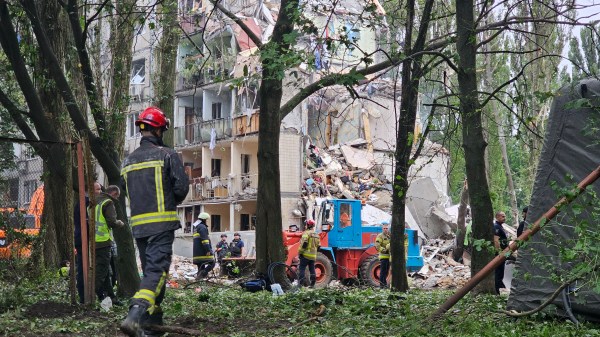
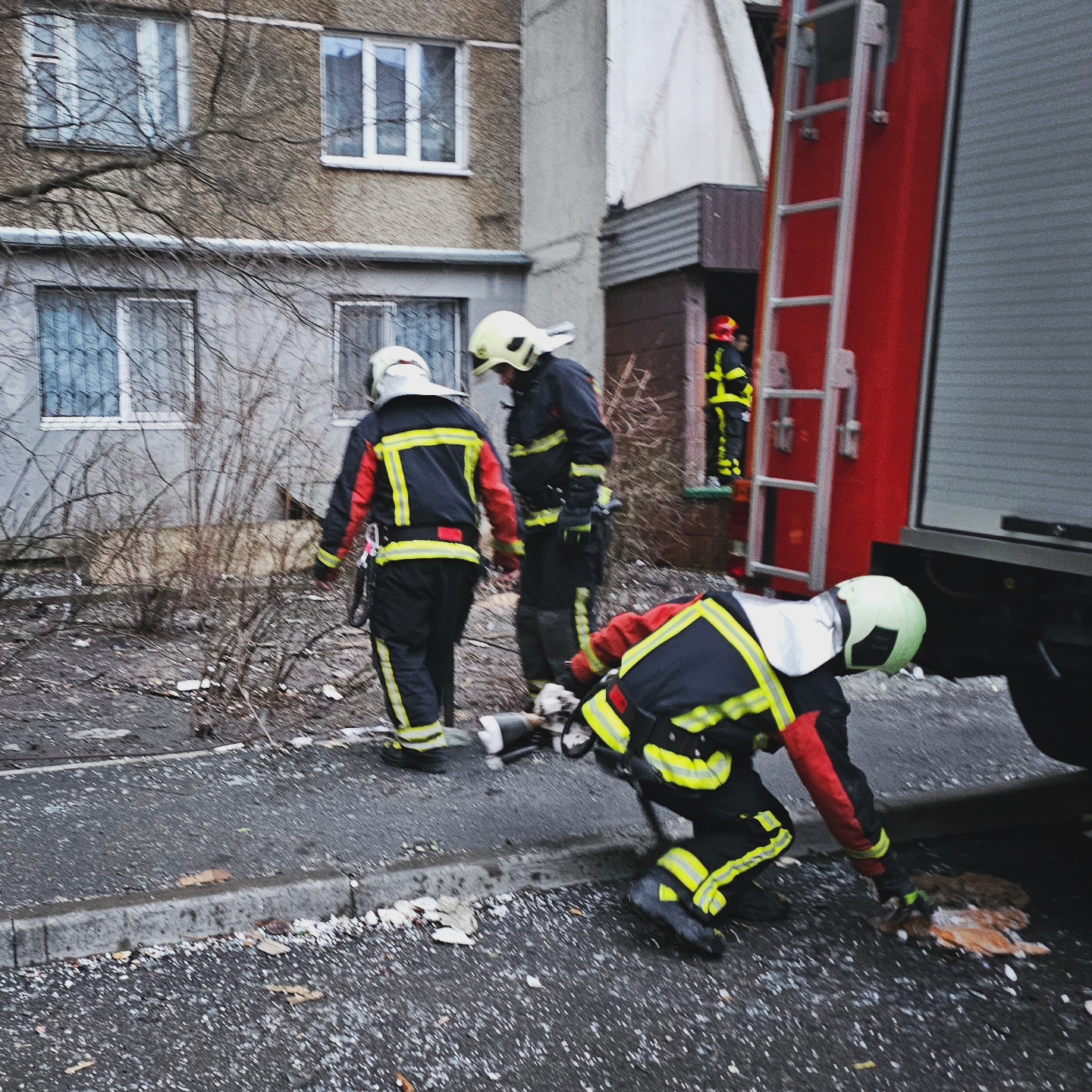
Rescuers working on the site of a russian strike in Kyiv, July 31st, 2025. Credit: Emmanuelle Chaze.
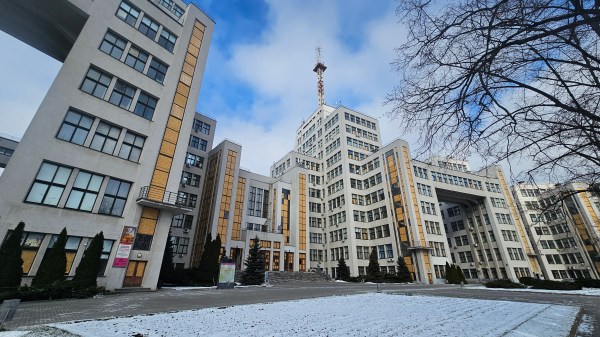
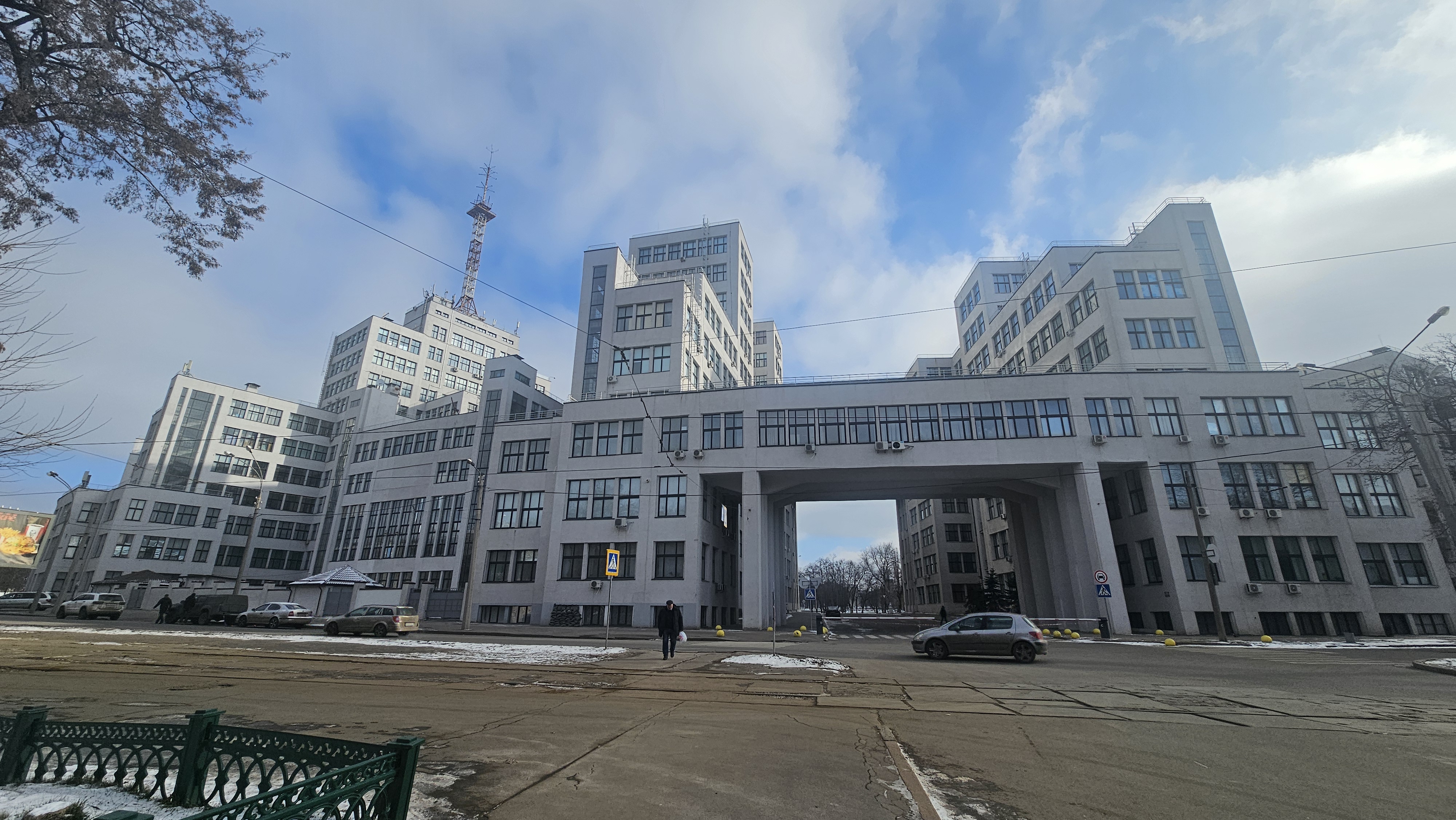
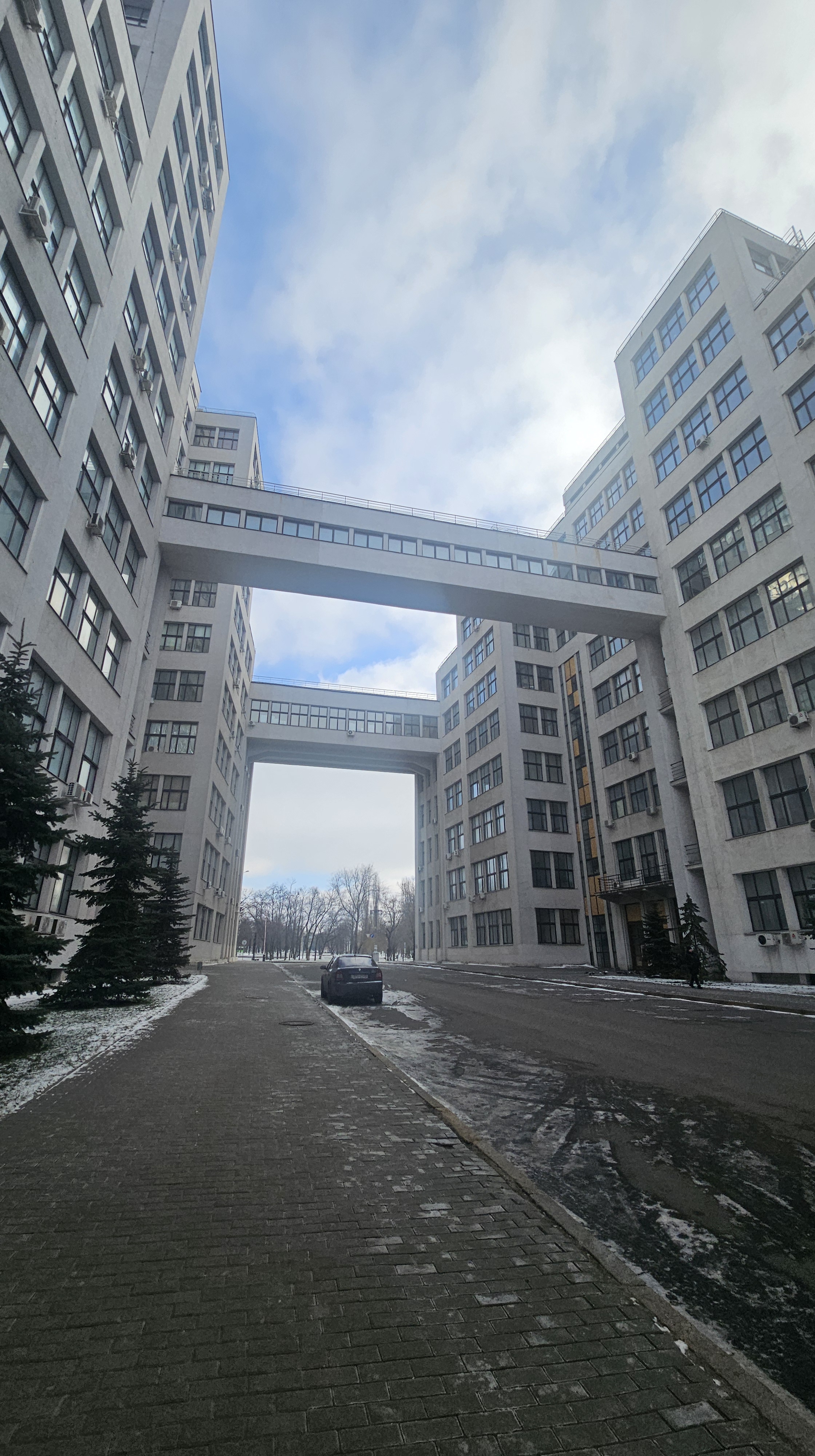
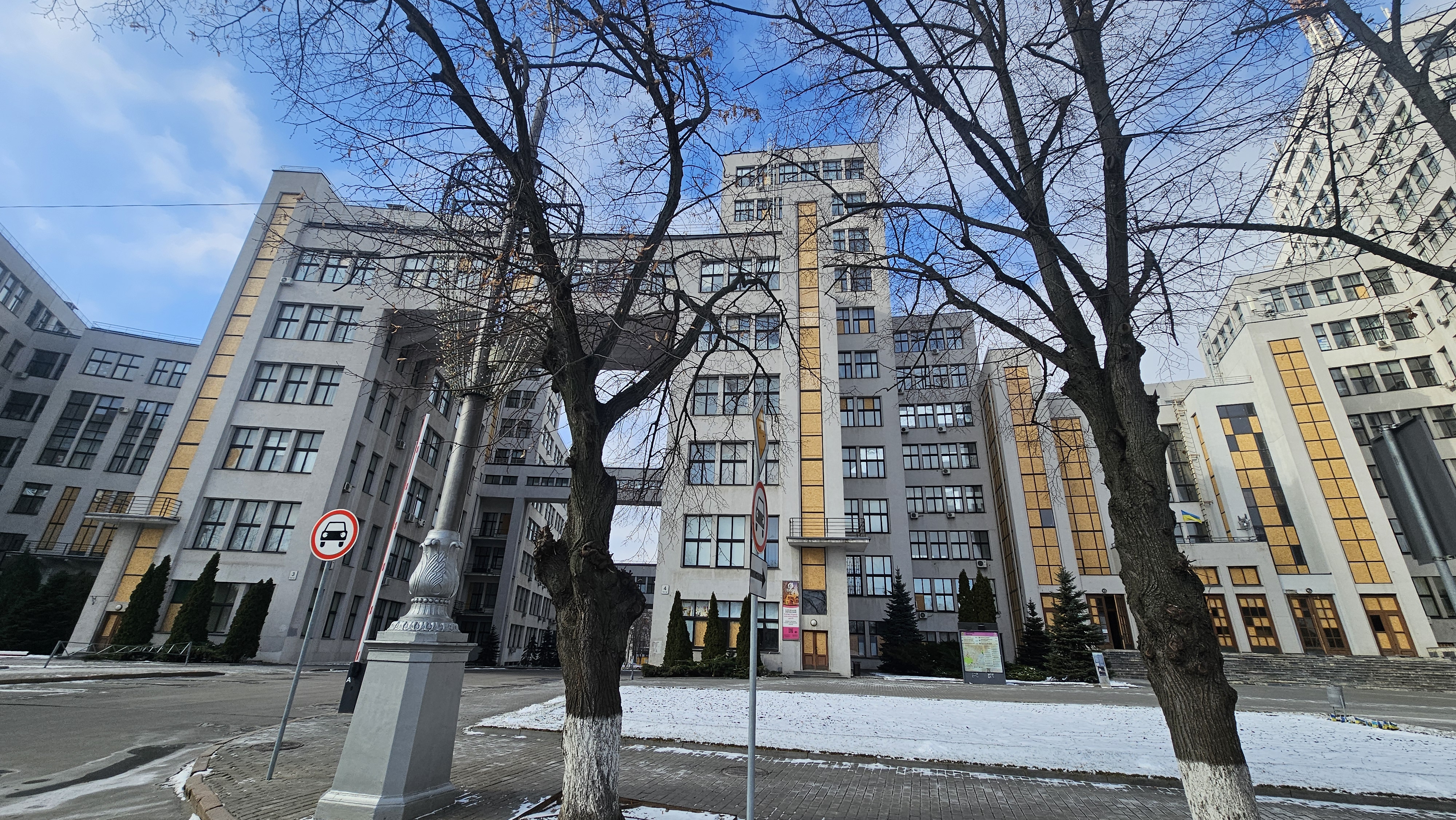
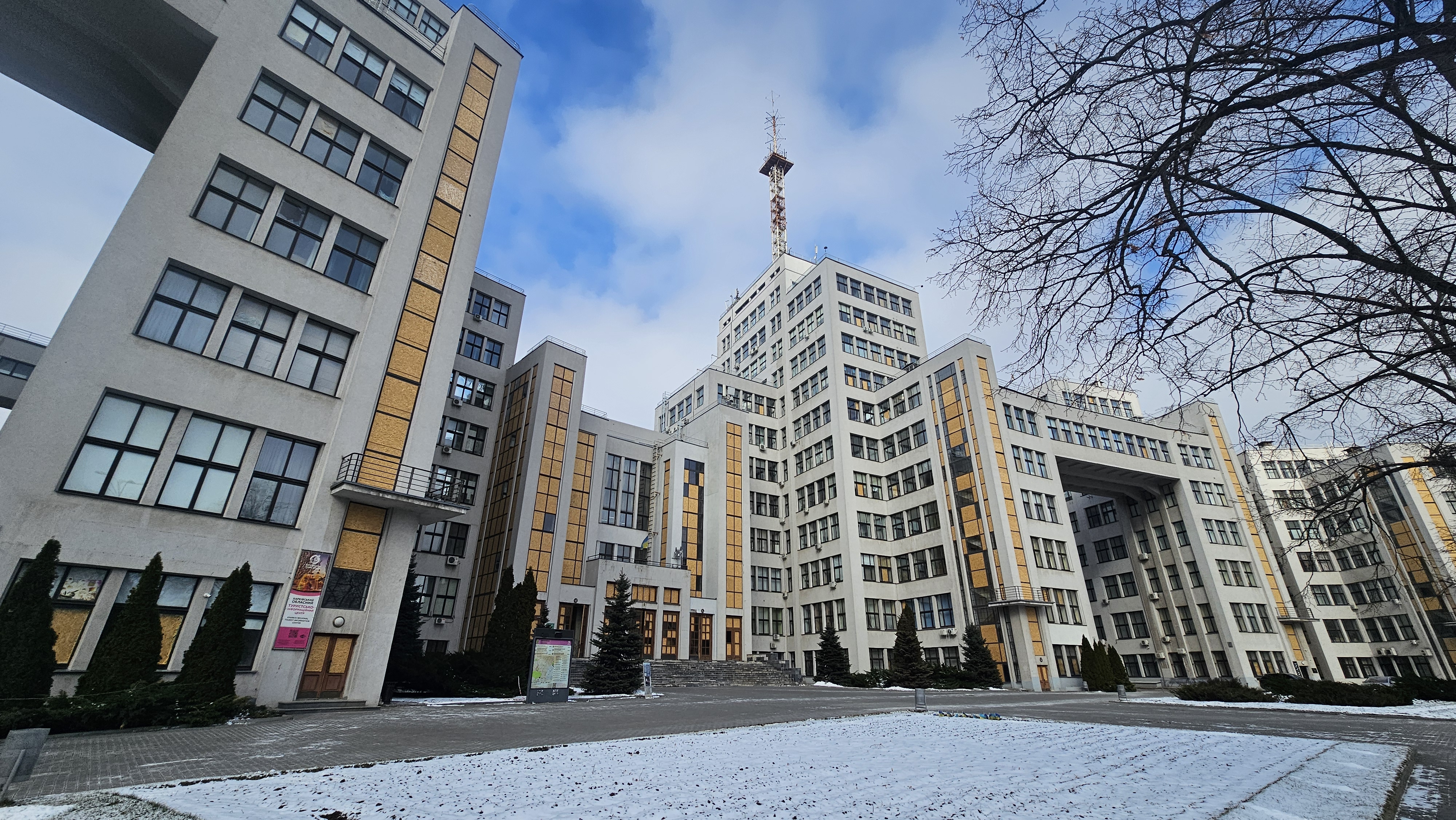
Back in September 2022, during my first ever visit to Kharkiv, it was the first landmark I saw after arriving at night. It was unlike everything I had seen before, Kharkiv seemed so foreign, so different, so empty as well, back then. My heart swelled when the following day, at 9am sharp, as I was doing my first TV live of the day, Ukraine’s national anthem resonated over Svoboda Square. It was hard not to cry, hearing that out while mass graves and torture chambers were being uncovered a few hours’ drive away. I didn’t know what to make of it all. War, Kharkiv, the novelty of a city I had never visited and only discovered while it was being bombed. I just knew I was really falling for Kharkiv, its people, its buildings and its resolve to survive and fight back. Now I have many Kharkiv memories and even made friends there, so it is not so mysterious anymore but still acts like a magnet to my heart.
On October 28th, 2024, as Derzhprom was hit by yet another russian attack, I deeply regretted not having looked at it more, not having taken enough pictures of it during all of those trips. Here in Ukraine, we never really now how much longer we have to enjoy what is around us. So, during my last visit, I made sure to have my Derzhprom walk and took many, many pictures, from all angles. With my eyes for immediate recording into my memory and with my phone for virtual memory and to share. It was so cold, I had forgotten my hat and gloves, the cold had frozen my eyelashes and voice, I couldn’t feel my fingers anymore, it was even hard to lift the phone and snap a picture, I remember that burning feeling well, and the winter sun. The blessed moment of solitude in an early morning, in a city still asleep. A passerby made fun of me taking pictures in that cold, said it was “just a building”, but I saw the sparkle in his eyes when I said it wasn’t just any building. He smiled with a lot of pride. Kharkiv pride.
As the year ends, I look back and realize that I don’t have it in me to make a list of achievements, or a top 10 of any kind. I realize that I am past that need for external validation and also that I would hate triggering anxiety to anyone feeling that they ought to have done more. It is inevitable, people compare their deeds and actions to those of others, and I would very much like to remain out of this unhealthy race.
Instead, I am sitting in my home in Kyiv, taking the opportunity to quietly reflect on what was meaningful to me this year. What I would like to bring into 2025 and what has been burdensome and must be left behind.
It has not been an easy year, but it has also been a good year in terms of personal growth. I have learned, I have grown, and I have outgrown sad or uncomfortable situations. I close this year as an eventful chapter of a book still being written, knowing that I did my best to cause no harm to others by words or actions, to stay true to myself, to report fairly and with my heart, and to remain kind although many a time it was tempting to give back the crap thrown at me by some people or circumstances. It was tempting to give up. To never get up again. To let despair overcome.
But in the end of the day, the best response to adversity is to continue to nourish one’s inner light, so as to be able to shine around others worthy of sharing it. Even when the flame is tenuous, it is worth keeping it alight, sheltering it until it shines brighter again.
In the end of the day, even when it seems that darkness prevails all around, it is worth walking a path of light. One minute at a time, one hour at a time, one day at a time. Until the clouds seem to give way to some blue sky. A blue sky that was always there. I am neither an optimist nor a pessimist – I am not sure it gets better, but I am sure it is worth hoping that it will, through setbacks, through betrayals, through death.
After all, why would we live for if not to thrive. Life must be worth it.
My point is: I am glad for anyone who lists and shares their achievements for this year. But also, if you have simply managed to go through life relatively unscathed, if you have managed to survive it and felt glimpses (or tons of) joy, kindness or love, this achievement is already huge.
Driving through the wintry landscapes of Eastern Ukraine, I am, as usual, taken aback by the beauty of the landscapes that have not yet been destroyed. I feel the gap in understanding widening between those who know what is happening in the frontline regions and those who do not.
Every day, people in the West ask me what Ukrainians think about a ceasefire, about territorial concessions, whether they are tired, and if it’s time to negotiate. “All wars end at the table of negotiations.” It’s violent to hear—even from me, a foreigner here. I see firsthand what this would mean for Ukrainians, just as I see firsthand how landscapes in Eastern Ukraine are turning into ashes.
It feels as if Ukrainians scream into the void, dying in relative indifference, and that they would be better off doing so in silence because the West is tired, bored, and annoyed that they are still fighting.
But it’s not a game. Ukraine can’t just be switched off. This war will not be over just because some think it’s time to sign papers. Tens of thousands are dead and wounded; entire generations who were the bright future of Ukraine have perished. They are now called heroes, but beyond that soothing word is only silence and emptiness for tens of thousands of families who have lost their loved ones. What about the millions of victims of occupation? Do we simply forget that they exist? What about the deported children? Do we let them grow up brainwashed, then be used as cannon fodder against their own? Do we simply shrug them off? What about Crimea, which some say is “gone”? Why would that be? It’s not gone; it has been let down. Ukraine doesn’t fight just for itself—and yet it lacks the necessary support to win. It lacks the support to survive. Would you wish that for your family, your people?
But I want to hope: I saw what Syrians achieved with absolutely zero support from the world. So maybe Ukrainians, when they are similarly let down, will still overcome.
“Well I’ve been sitting here for hours, baby, just chasing these words across the page“*
We always say of someone who has died that they were special. Of course they were, we are all unique. But today I struggle to write those words as they are for someone truly incredible. I struggle to write those words because when someone is bigger than life, surely the world must stop with them when they disappear.
Yet when I found out about what happened, Andriy – I can’t write it, I don’t want it to be real – the world around me kept going. Here in Kyiv, your city, I stared at the black and white post that popped up suddenly on social media – I stopped walking in the park – and the last autumn leaves continued to swirl and fall around me, it was yellow and beautiful, the sun shone its rosy light on the Dnipro river, all was quiet, and all this beauty around was so absurd and insulting and obscene while the post on my phone said you were gone and I wanted everything to stand still. I looked at my phone to see if you would be calling to tell me it wasn’t true – but we hadn’t spoken in months so there would be no reason for you to call now. You would hate it if I were sad – you would say “that’s bullshit, you’re alive, you should be so grateful for it!”. I know it because you said it before, but forgive me if no matter how much I tried to be prepared in case that dreadful day ever happened, it hurts so much.
I know that you would have hated leaving nothing behind, and your legacy is bigger than you can imagine, because you meant so much for so many, in the many lives you have lived. Words will never suffice to describe you, you’re an Encyclopaedia not a summary, but I want to share those.
Andriy Fish Rybakov.
We met at work, so to speak. You were in a trench hideout somewhere East and you video-called me for an interview. You had written a beautiful text about your war experience and it was getting published in one of the media I work for. I was very intimidated, because you were so well-spoken and so knowledgeable.
The article was published, with your text and interview, alongside a picture of you in the trench. You were very pleased.
Andriy Fish Rybakov, summer 2023, Donetsk region
A few weeks later, you started sending me pictures from “your workplace”, the frontline. I always feel honored when soldiers trust me enough to share snipets of their lives with me, and then you started the calls. At all times, but especially at night. You called many people, I wasn’t anyone special, but you definitely were. You would call when bored, as can happen during the long hours of wait on the frontline. You never asked if it was a good time to call. Fish (your callsign) calling meant I had to drop everything to talk, no, to listen to you. And why did I, like others, do it? Because I don’t think I have ever met someone who had more interesting things to say than you. Because listening to you felt like growing wings of knowledge while riding on a high-speed train. You never stopped, you never slept, and you always had a song to share.
You would call for hours. Everyday, when possible, and because of war, we immediately bonded. We were. Were, I hate that so much. We are the same age, we love the same books, listen to the same music, speak the same languages. Except you Andriy knew more of everything, in every field. We never really talked about your career as an immunologist, as if that had been merely a past time for you, while you excelled at it before you chose to excel at war. You are mind-blowingly clever, in every field you chose to give your attention to. You called, and I mostly listened, and often I wondered if you cared at all that someone was on the other side of the line, but you did, because you’d suddenly stop to stare at me right through the screen, narrowing your piercing blue eyes as if to scan me and enquiring: “but how are YOU, Emmanuelle?”. The only correct answer was “fine” because you couldn’t consider anything that didn’t involve the zero line a real problem. And rightly so. After all, what else still matters? I was totally fine just listening, as I was both enjoying your conversation and learning so much. You were always humming, too, and sending me links to songs after pointedly rolling your eyes in disbelief when asking if I knew such and such band and I didn’t. You would say: “listen to this and call me back”, and hang up on me. So I did, every time, and we picked up the conversation with more songs, more books, more random facts to share. At some point I had asked you to turn on the video and I think you loved it because you could cook, clean your weapon and of course not sit still for one second except after you started drawing.
I don’t think people who do not live a war from the inside can understand just how every second stolen to death near the frontline becomes the most precious for those who experience it. For months, I looked forward to those calls every day, and when you were fighting, I hated the silence as I knew it could turn into an eternal one. Sometimes our conversation would die down so we would just draw together with the video on. Or you would introduce me to your brothers in arms. Or you would teach me some tactical medicine and you would ask to see my flack jacket to check if it was a good one. We talked about the war, but we mostly talked about everything else that makes this world bearable and for you it was mostly art. One day you said “you can’t imagine just how good it feels to speak English again and to talk about those things”. Because of the war, or maybe because I used to work a lot in archives, I felt like I had to save as many of those moments as possible, so I often screenshot our calls when I felt we needed to keep a moment for eternity. Today I am so glad I did that, even if it doesn’t alleviate the pain.
We were each other’s windows into our worlds, and we started sending each other little things. I first got you “The little prince”, which I must have gifted to all my friends, a notebook and a pencil to write. I wanted you to journal, as you wrote beautifully. The pencil was my favorite, with the quote “errare humanum est, perseverare autem diabolicum”. “To err is human, to persist is evil”.
When you opened that parcel, on video call, you were so happy. Not because of the sweets, not because of the book, but the pencil and notebook made your day. Your eyes were glowing with excitement. Obviously, you already had pens and paper before but you loved that those had been chosen for you specifically. From that moment, you started drawing any time you had a chance. You brought the notebook everywhere. You were always scribbling, you got yourself more pens and charcoals. It was so dark and tortured, but you had found a way to exteriorize some of the things you were going through.
Some days you were so angry, and also at me. Because nobody could understand your pain, because I’m a foreigner, because I wasn’t on the zero line. You could be really mean during those outbursts, and you hated the whole world, and I told you so, and you did apologize, and we would move on.
Of course we met, and it was like in a movie, and most of it belongs only to us. But some of it I can share, because I know you would love for others to smile when reading it. I was reporting near your positions, so one day you drove straight from the zero line after a mission to where I was. It was summertime, you came with your dusty frontline jeep, and from the open window you shot your best smile at me and said “well hello my dear, get in here” with your best British accent and your smirk. It was as if we had known each other forever. You had the notebook and the pencil in your jacket. You started to empty your pockets to show me everything you had carried with you while on the frontline. You wanted to give everything you could, to show everything you could from your world, and you were pouring war onto my hands.
That’s how we met. At first you didn’t want to hug me because you were ashamed – after a week on position, no shower, no water, the heat. You smelled like the frontline – stress, death and sweat – and I told you to shut up about it because you were alive and it was all that mattered – so we hugged for the first time of many. And you loved crushing your friends into your arms.
You managed to get a small leave so you showed me parts of your life in Donetsk region. We did many pictures and you loved it, you loved knowing that someone would see and read your story. You loved that it was not all for nothing. And I’m so glad that you loved those pictures and sent them to your loved ones – something I’ve only discovered over the last couple of days as many are sharing them in their tributes. The pictures are yours and theirs, but I have the privilege of knowing that the moments when we took them were ours only. I have the privilege of having lived them with you.
That time, we spent an entire night drawing, singing and dancing. You asked why I wasn’t asking you more about the zero line. I said I didn’t want to trigger any trauma or memory and that the first aid in ptsd treatment was to listen, not to offer unsolicited advice or bring up upsetting facts unless the person who lived through those wants to. You liked that very much, so you started to talk about all the horrors. And after that you sang again…it was “You’re my Waterloo” and I filmed you to have it with me forever. Oh, you liked how often I filmed you. We both knew why: it was all for today, when all we would have left of you would be the memories. I must have watched this video a hundred times since that black and white post. You really loved this song.
We met again, and again, always last minute and always a surprise, very late at night or very early in the morning. Maybe that’s a story for when I’ll have the strength to put into more words just how extraordinary and special you were. Not just to me: seeing the tributes that so many are writing about you, it is already clear that not just your friends, not just your colleagues, not just Ukraine, your beloved home, but also the world has lost one of its brightest. I want to believe that all the light you brought to us is not lost: it will live within us forever. You have changed so many lives, just by existing and by being you, and not everyone has that ability. You truly are one of a kind, you touched the heart of each and every one of us who were blessed to know you. I know that I am changed forever for having met you, and I will carry that in my heart for eternity. Heroes never die, and they’ve been gifted the brightest with you.
“….You’re my Waterloo
I’ll be your Calvary
I’m so glad we know just what to do
And everyone’s gonna be happy
But of course.”*
* Lyrics from ‘You’re my Waterloo’, The Libertines.
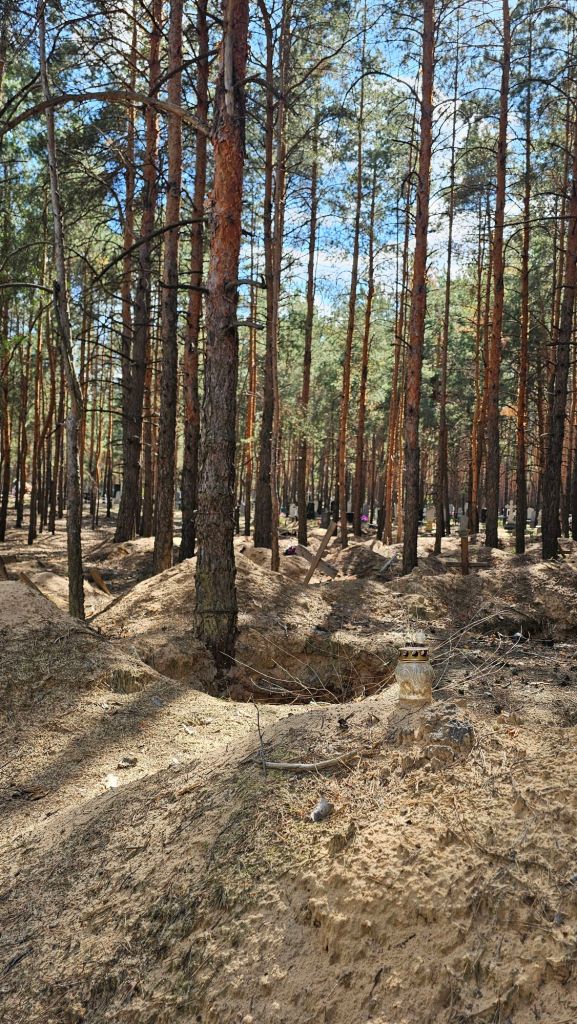
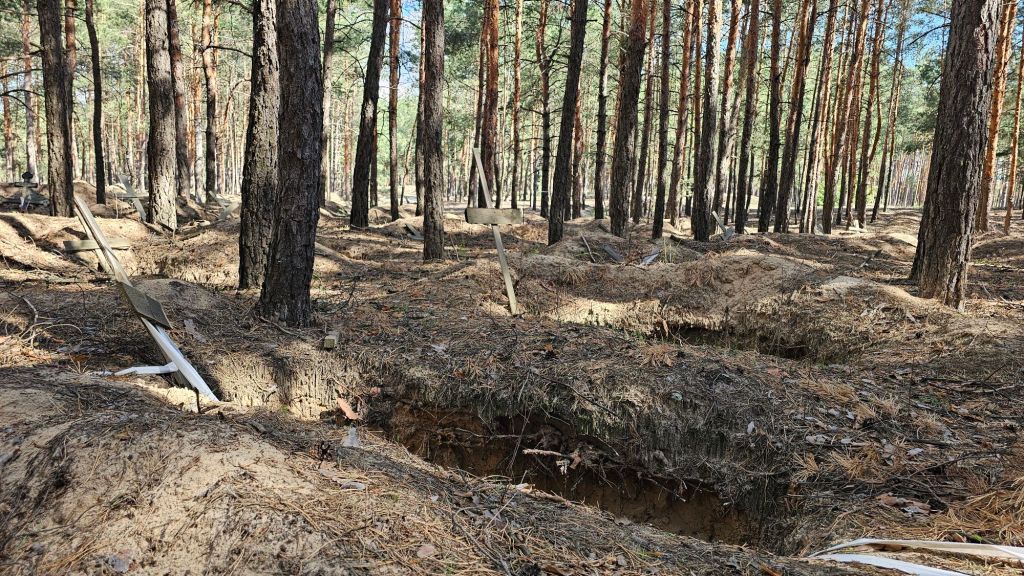
This time, the birds are singing. There is a lovely smell of pine trees. On the ground, pinecones seem to decorate the yellow sand. That yellow sand.
This time, I don’t hear any flies. I don’t hear a deafening silence. I don’t hear the clicks of the cameras. Nobody is wearing white overalls and digging the soft soil anymore.
There are no faces with empty eyes. There is no active fighting nearby, no shots to be heard, no artillery.
But they are still here. The hundreds of graves, now empty.
The dunes between the trees are twinned with holes and wooden crosses that no longer stand. Some candle jars and flowers were brought by relatives of the dead.
I look at my feet – this time it’s not scary to look at the ground – it’s empty of horrors.
But the crimes remain.
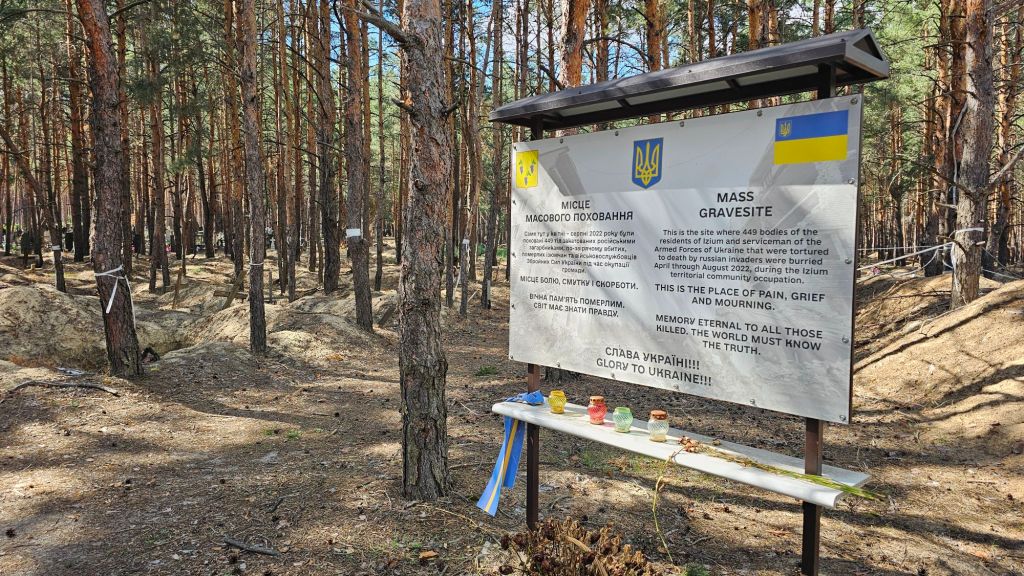
The 449 people found there were Ukrainian civilians and servicemen.
Only a few meters away from them, as their tortured bodies were rotting in unnamed graves, Russians were holding their positions, eating, sleeping next to their victims.
Their crimes remain.
A commemorative sign reads: “This is a place of pain, grief and mourning. Eternal me mory to all those killed, the world must know the truth.”
On September 17th, 2022, I had no tears. They didn’t come. It took me nearly two years to manage this trip, and this time the tears came suddenly and unexpectedly, along with the memories of the horrors I have witnessed that day.
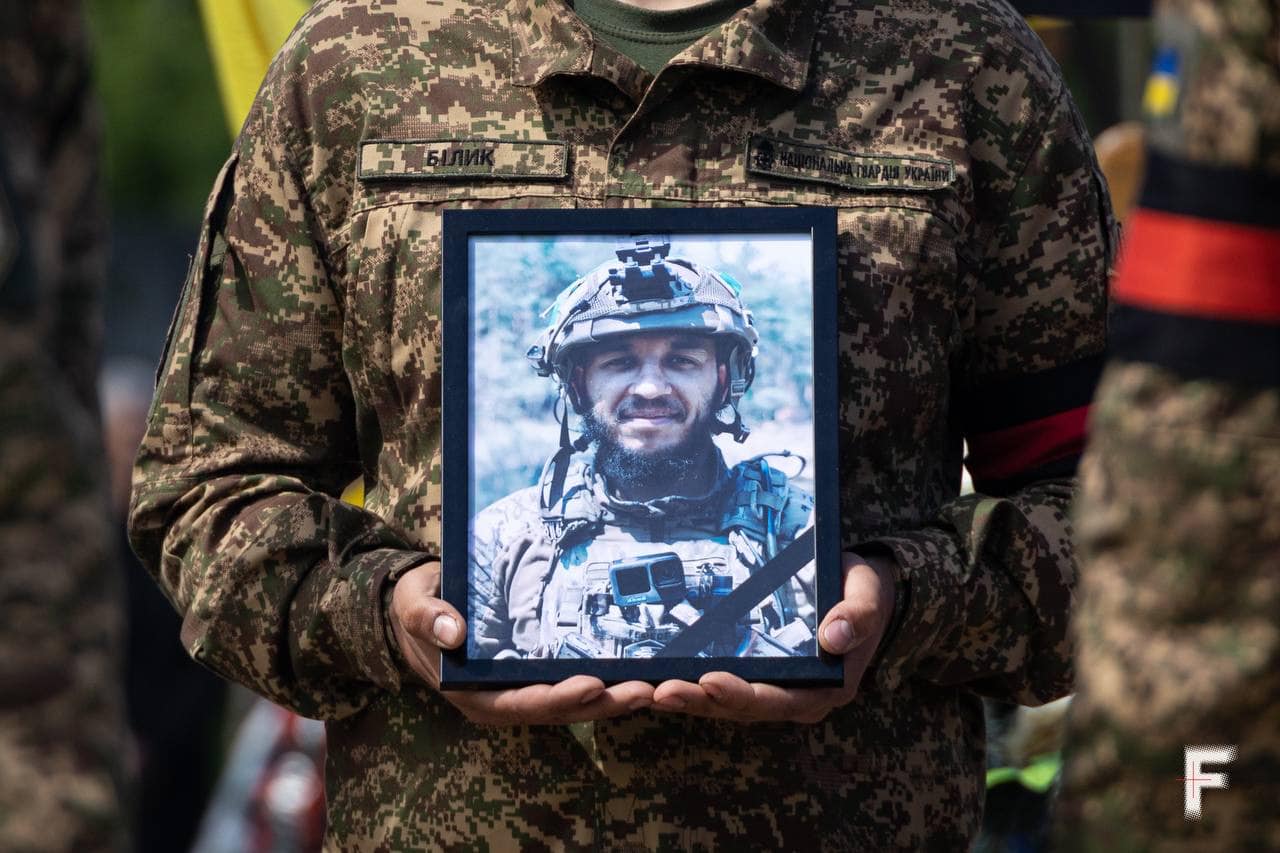
It’s early on Saturday morning and Kyiv’s city center is quiet. The weather forecast announced rain but there is a pale morning sun peaking through scattered clouds and a light breeze. There are no cars yet, the streets are still empty. There is the sound of my heels on the pavement and the hissing of the wind in the chestnut leaves, the petals of their flowers already beginning to scatter away. I’m walking towards Saint-Michael’s golden-domed cathedral. The other night, I’ve met Dasha, whose friend Denys Zelenyi, killed in action at the age of 28, is being buried today. We decided to attend his funeral, as a sign of support for his family, for his friends, and as a sign of respect for the ultimate sacrifice he paid to defend our home.
I didn’t know Denys, and now I never will. He has joined the ranks of Ukrainians that my circle of friends knew, of people who walked the streets I feel so comfortable walking, of people who worked in restaurants I like. Before the war, Denys was the manager of a very trendy Kyiv restaurant. He left it behind to serve, and saw some of the worst battles as senior lieutenant of the National Guard of Ukraine. I didn’t lose a friend, but I lost yet another opportunity to meet a new one. The bravest, those who joined, are being taken untimely and unfairly from us, from our society, here in Ukraine. They are the people who loved Ukraine the most, the ones for whom Ukraine came before everything else, before their own lives.
One by one, in Kyiv and elsewhere, people who used to light up a room have their own light abruptly switched off for eternity.
One by one, Ukrainians who have only known an Independent Ukraine lose their best to the folly that is Russia’s war against Ukraine.
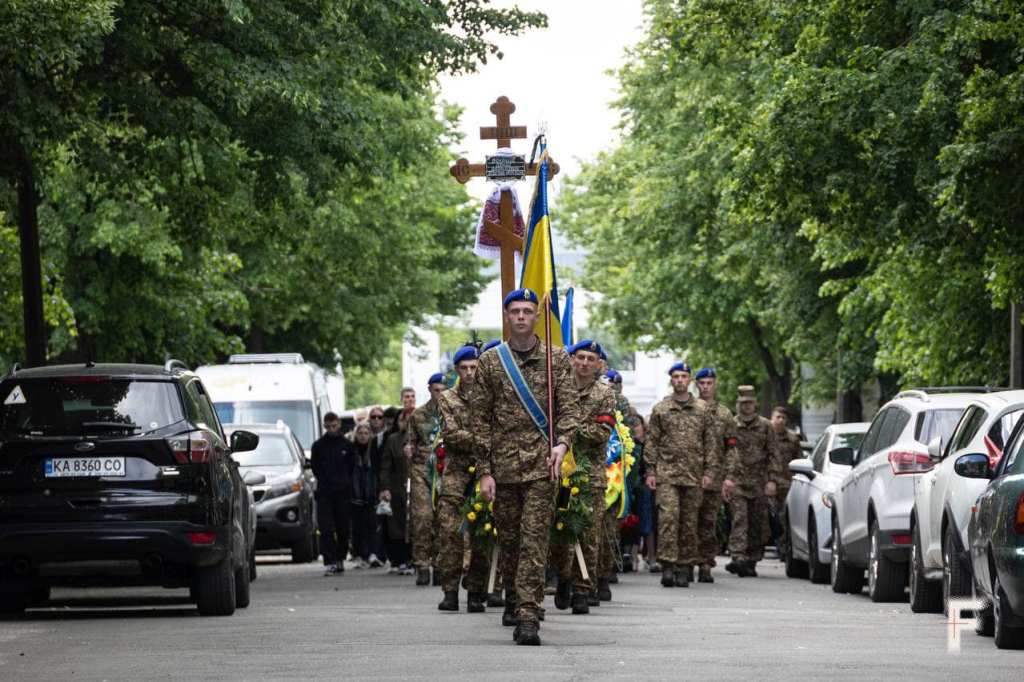
Dasha and I meet at a crossroads, and walk together to the Cathedral. On social media, the news of Denys’s death was widely shared, but not very many people showed up, in comparison to other funerals. People who are here though are truly devastated. Servicemen are visibly upset, they lost a brother-in-arm. Kyivans arrive with eyes red and swollen from crying, they lost a friend, a colleague, the one among them who took up the arms. Their pain is immense.
We are asked to form a guard of honour for Denys’s procession towards the Cathedral. On the one side, the soldiers, on the other, civilians. We wait long minutes in silence. We hear the whistle of birds, and the wind gently sings in the chestnut leaves again. It feels like Life makes itself known, just as we are faced with Death. It feels like eternity is speaking.
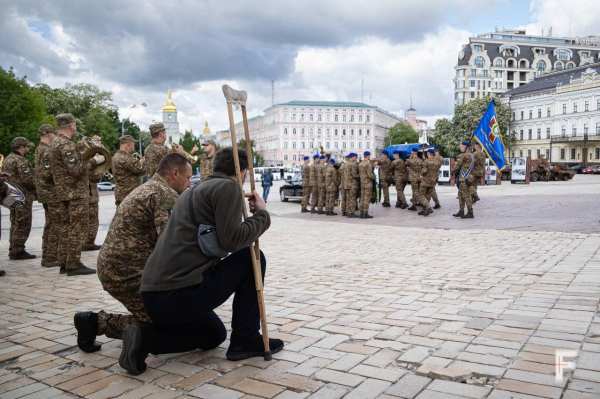
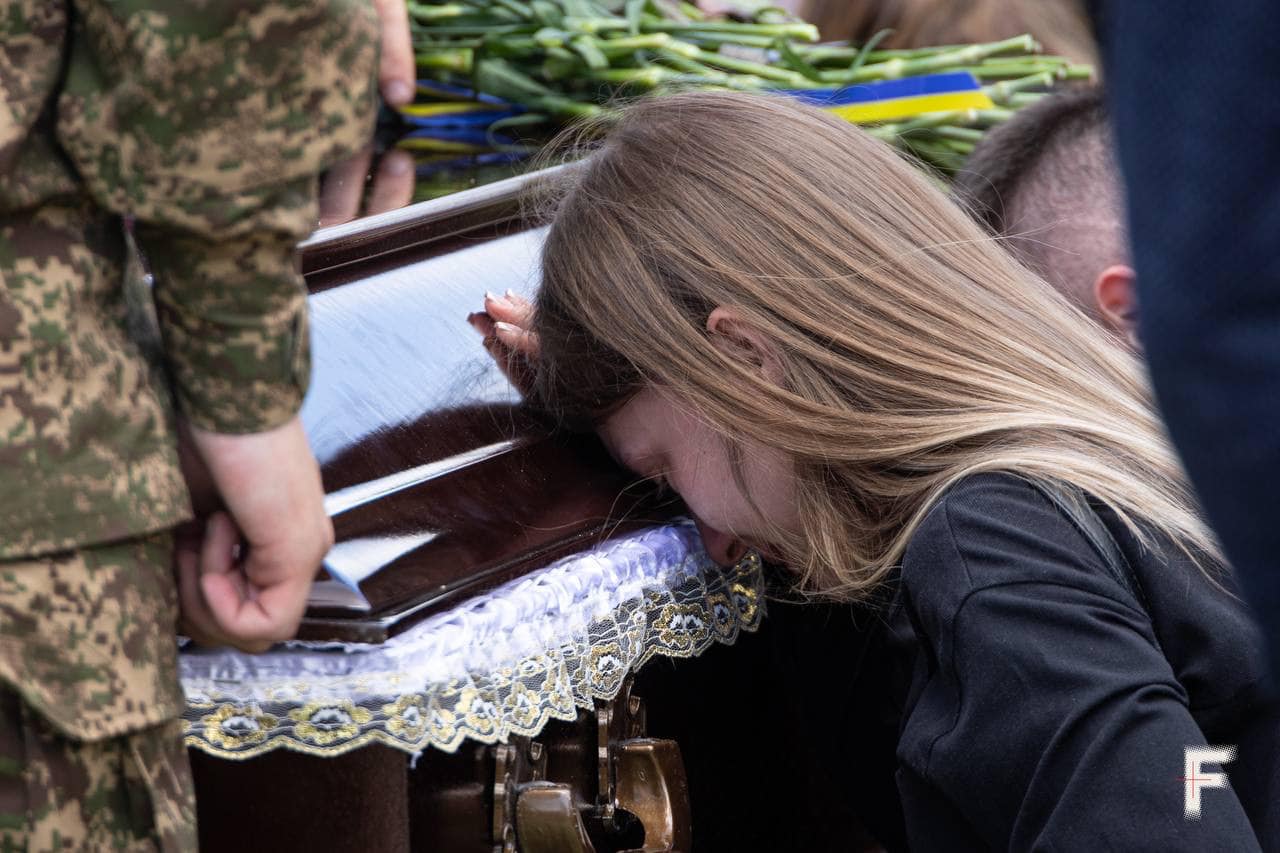
It’s 9am, the moment when all of Ukraine stands still to honour the memory of all its Fallen. It’s the moment the faint melody of Plive Kacha resonates, breaking everyone’s heart even more. Carried by soldiers, Denys’s casket arrives, covered by a blue and yellow shroud. We all kneel before the Fallen. The sobs intensify. A young woman collapses in the arms of her friends, crying uncontrollably. Her broken heart breaking the silence. Indescribable pain, everywhere. Irreparable loss.
We follow the casket inside the Cathedral. I stay at the back, and Dasha walks a bit closer. Slowly, the cathedral fills up. We surround Denys’s closed casket in a silence only broken by the funeral litanies of the priests. We are lulled by their voices and the sweet scent of incense. There are a few photographers, who discreetly document the scene. I know some of them for having met them on sites of other tragedies before. There is a sad irony to this: here in Ukraine, funerals have become a new, and saddest commonplace of socialization since the full-scale invasion. I think about taking pictures, but I can’t lift my hand and point with my phone at so many people grieving their loved one.
More tears, more sobs, and people holding each other and the flowers they brought, and the ceremony ends. I stay behind to light a candle. I’m an atheist but I don’t know what else to do to conjure fate and pray that none of the soldiers I know will ever take central stage at one of these funerals.
Outside of Saint-Michael’s golden-domed Cathedral, life has resumed in Kyiv, streets have filled up. Denys’s casket is now in the funeral car, its boot still open so that people can come lay their flowers and kneel for a last goodbye.
The line is long, Denys will be missed by many. A young boy dutifully lays his roses, looks a last time and, breaking in tears, brings his hands to his eyes, comforted by his mother. Dasha places a hand of the coffin and kneels to say goodbye to her friend.
It is over. Ukraine lost another son, Kyiv lost another one of its children. Later, another casket will come in, followed by another family mourning the loss of their loved one, in a terrible litany of funerals that will forever change the face of the country.
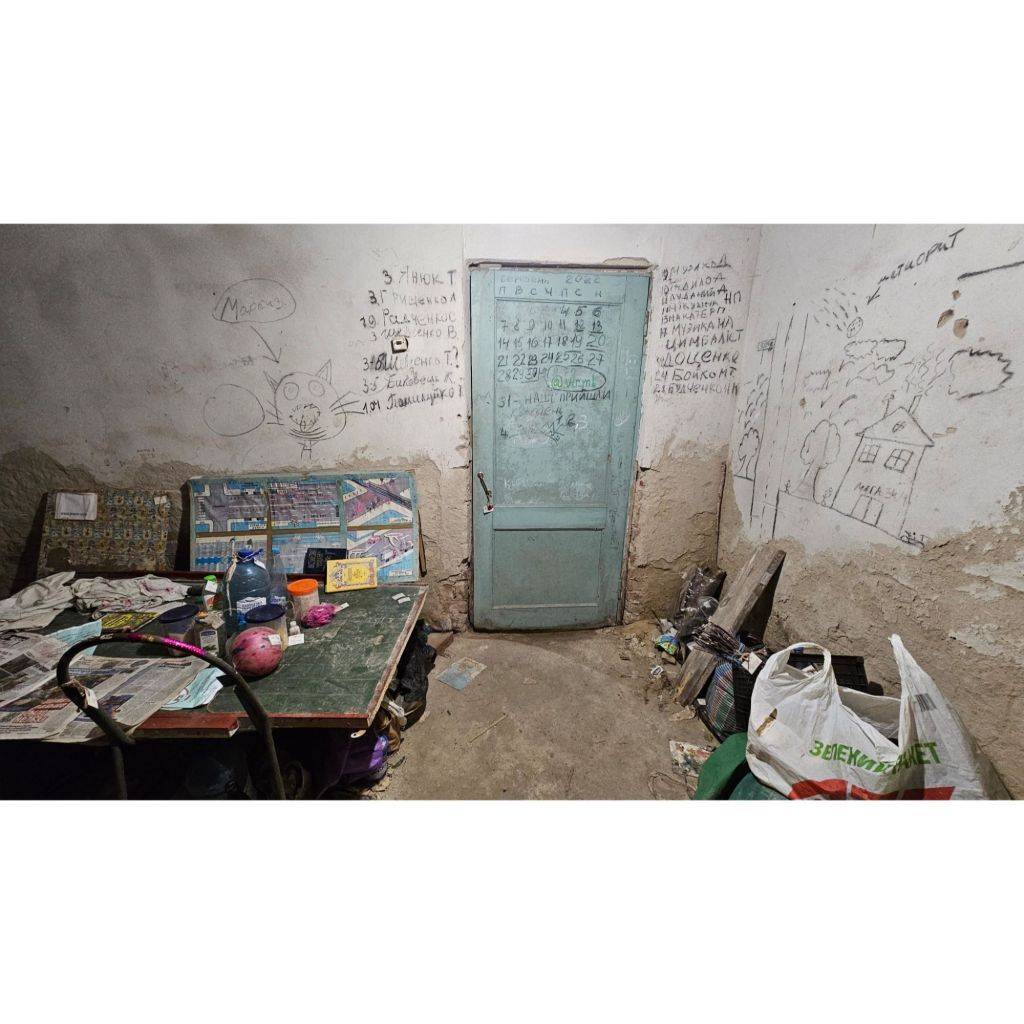
It is a little more than two years since Yahidne, in Chernihiv Oblast, has been liberated. You can read about it all you want, nothing can really prepare you to the sentiment of dread and loss once you set foot in that basement. It is cold, wet, and sinister. It is dark, and smells like mould. The distinctive stench of death has disappeared but somehow death is still everywhere.
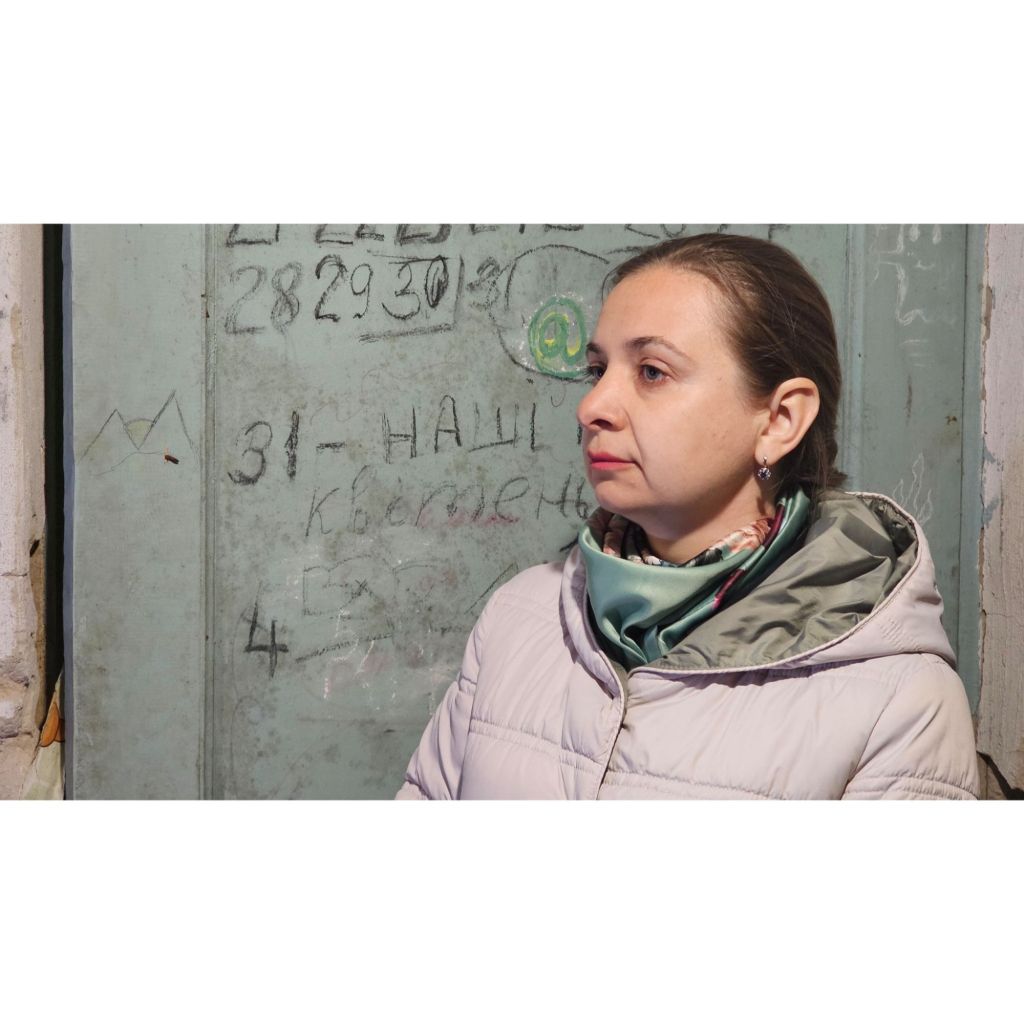
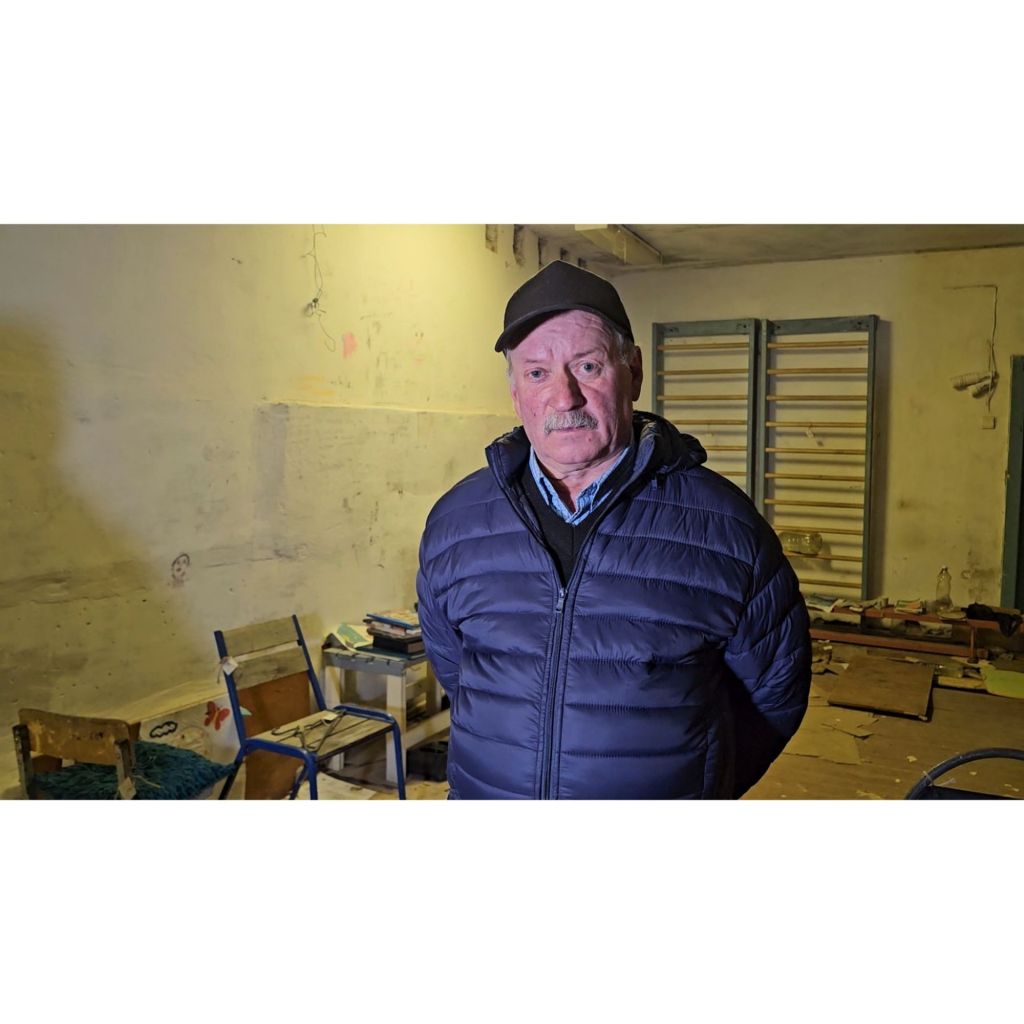
Olena, Yahidne’s mayor, tells us that under Russian occupation, the entire population of around 300 people, adults and children, including a month and a half old baby, was detained in the school’s basement for 27 days. Ivan (pic 3) was one of the captives, and he came back today to tell his story and share in which conditions people were kept there.
It was cold, colder than today, and terribly humid, with no electricity, heating, ventilation or toilets. The hooks visible on picture show where people were hanging their clothes when they were trying to rid them of the moist, to no avail. People were starving, allowed in the best days to have a meagre amount of food, the equivalent of half a plastic cup, and diseases started to spread.
On a picture, you see one out of the 3 military rations that were distributed to the 168 people kept in the basement.
The elderly, some over 90, started to die, one by one, but Russian soldiers didn’t allow the corpses to be removed for many days.
Children were asking what had happened to them – parents told them they were asleep, until finally the captives were allowed to bring the corpses outside and bury them.
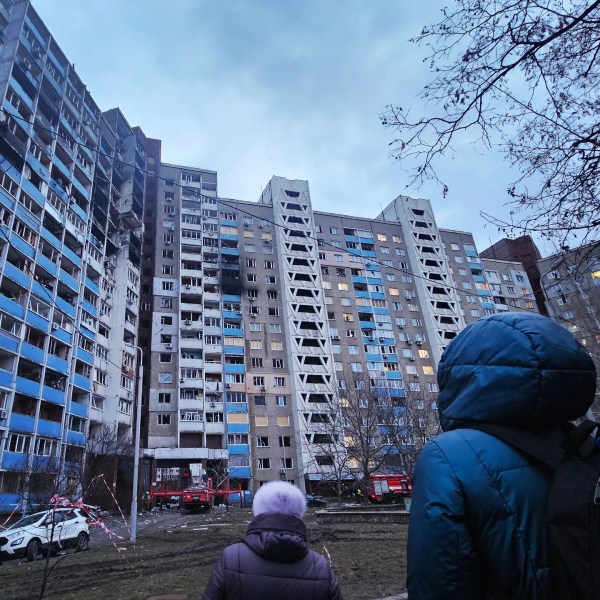
Mothers couldn’t do anything to keep their children healthy, feed them, protect them.
The inscriptions on the wall of the smallest room show on the left a list of names of those executed by the occupier, and on the right the names of the people who died because of the conditions of captivity. On the door, a calendar shows the days spent in the basement. The dates underlined mark the days when people thought they would die: for example, when they were summoned outside to dig a hole, which they thought would be their grave.
During those 27 days, 7 people were executed, and 10 people died from the terrible conditions they endured in the basement.
Both Olena and Ivan want the world to know that they will never forgive and never forget the horror they witnessed.